INFORMÁCIÓ ÉS AJÁNLATKÉRÉS
INFORMATION AND QUOTATION
Vissza
Home > News > Aluminium door and window systems for a golf club extension

Aluminium door and window systems for a golf club extension

Schüco-alumínium-függönyfal-FW50-tolóajtó-Reynaers-slider-door-terasz-emelő-toló-ajtó-üvegfal-CLT-1
2022 / 03 / 21

From almost the first pencil stroke, KAV’s staff cooperated with Kroki Studio on the extension of the Continental Golf Club. This included a jointly designed support structure, custom latched line-up and skylight connections, amongst other elements of the exclusive building. We spoke to András Göde, one of the founders of Kroki, about the joint work, what it is like to work on the basis of each other’s ideas and the interesting aspects of the project.

What tasks were you invited to carry out in this project?

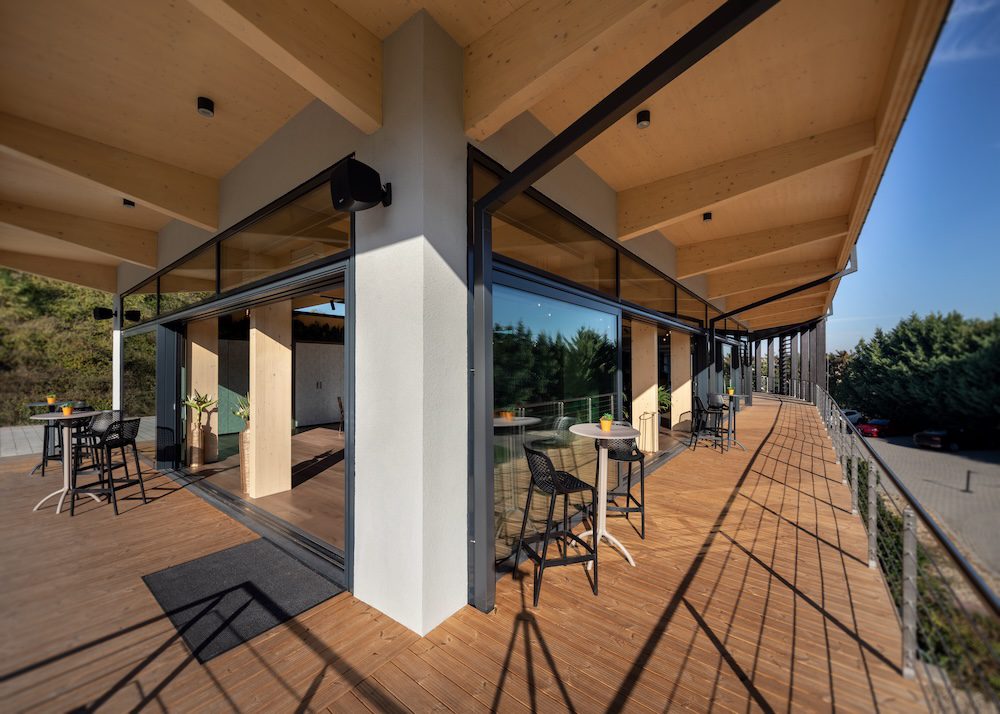
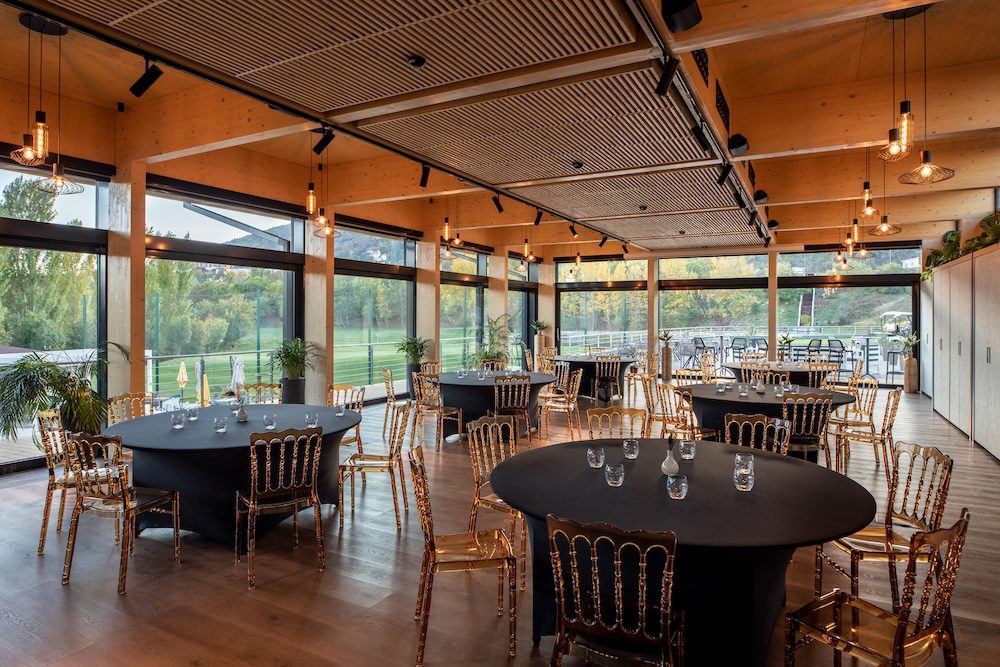
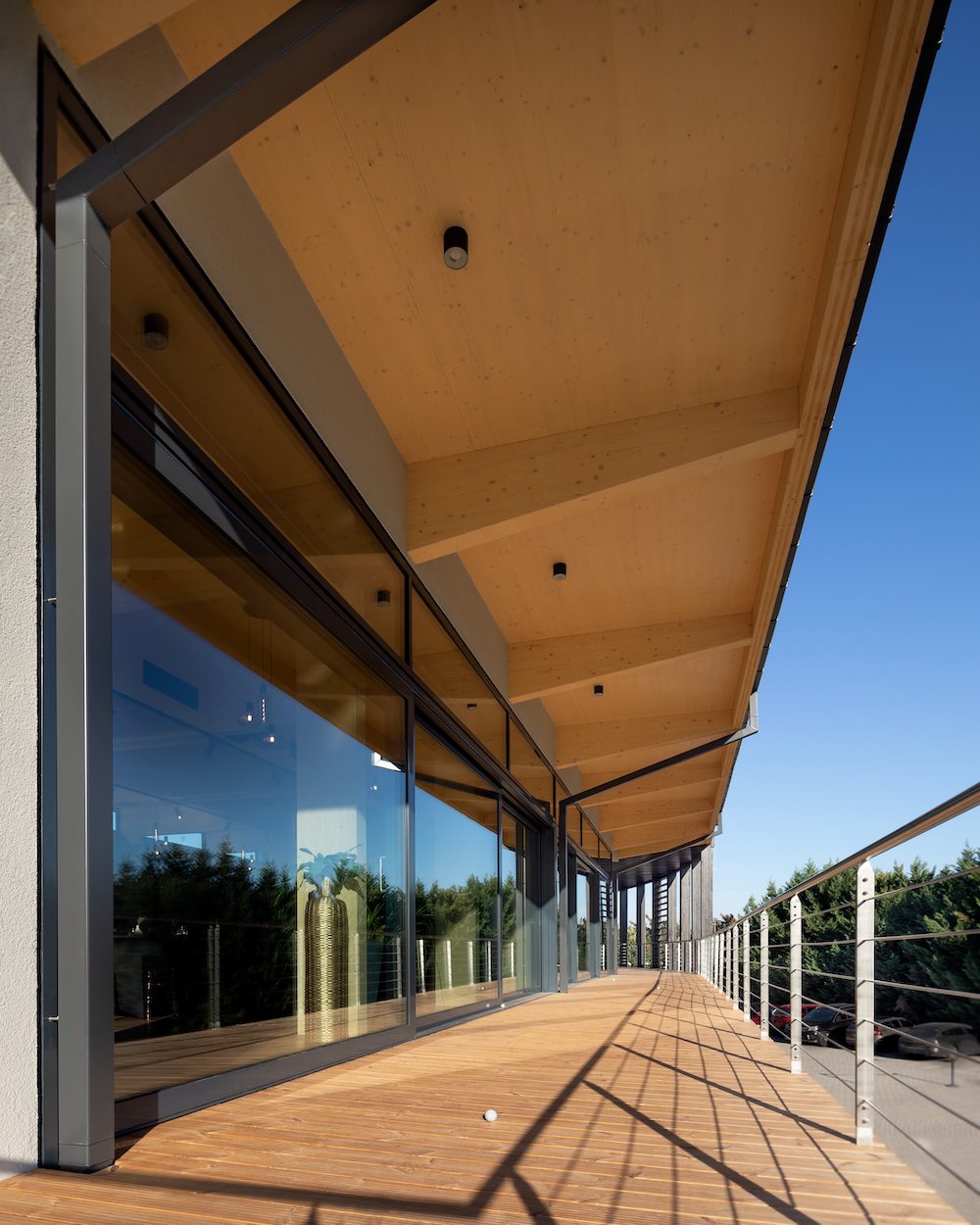
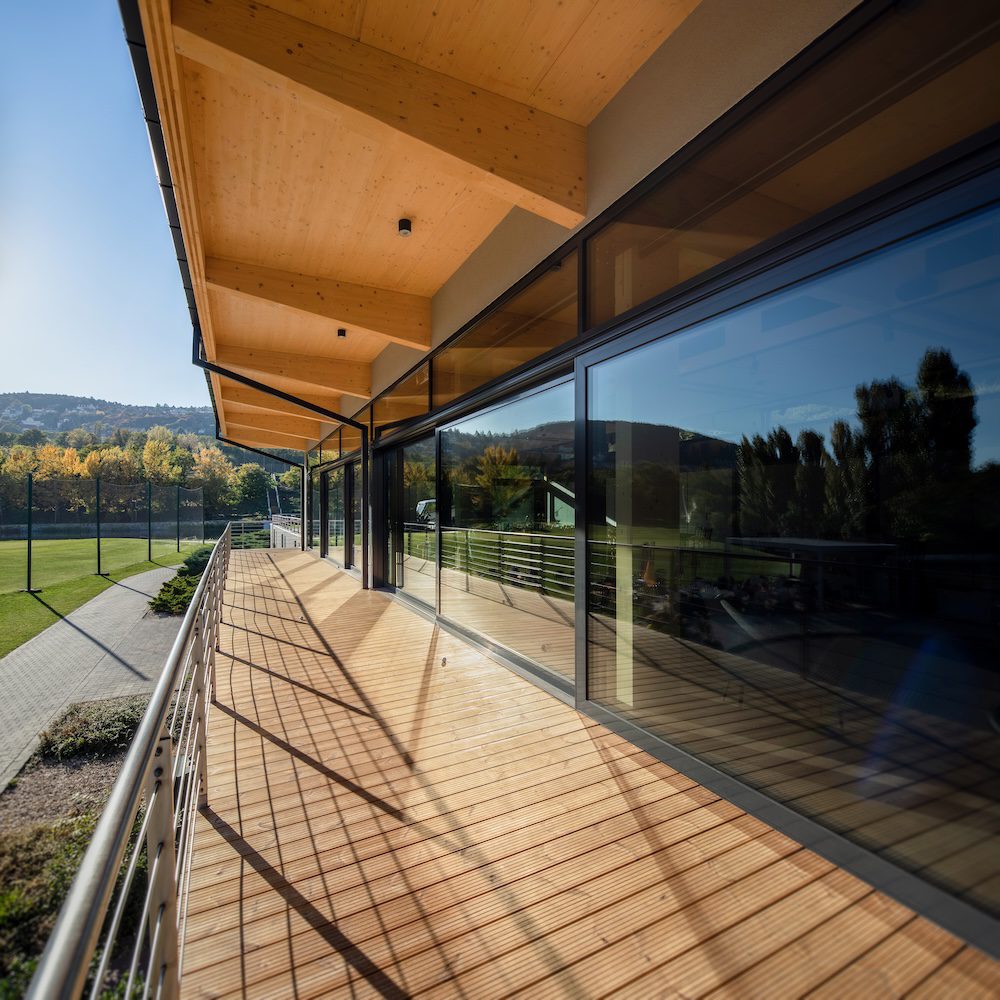
The golf club had an existing building with a restaurant. The new tenant asked us to expand it with an event hall, as there was only a tent there before. The initial idea was to create a simpler, warehouse-style building in terms of appearance, which we would later soup up, both inside and outside. However, we convinced them that it would be a better decision from all points of view to create a building with a beautiful structure, of high quality. So the decision was finally taken to go for a very modern, truly state-of-the-art, timber-panelled system, which requires very precise construction. And, given the structure of the building, we also wanted the glass structure itself to be really high-tech, making the most of the view. We designed large, sliding, elegant glass elements. Because the glass goes from structure to structure, you can’t really hide the junctions, so the installation itself also had to be high-tech. We did the concept design and interior design at Kroki and drew the nodes, while InnoWood, part of Dome Architects, prepared the woodwork construction design. It was here that KAV, who designed the glass structures, joined in. Then these three designer teams and their approaches had to be coordinated, which required quite a lot of consultation, in particular because some of the new structures were placed on the existing building, which required different node solutions. At least 30 nodes were made just to find out how the chosen door and window system could be installed. Thermal, drainage and shading issues were also raised. But it was worth all the consultation, because it’s not only us that’s very satisfied with the final result but also the client. What’s more, the glass walls are indeed visible all the way through, and yet the huge glass panels can be moved, almost by using your little finger.

How did you find KAV, or why exactly did you choose them?

Several companies came up, and we requested bids from three places for the glass structure. The owner was also involved in the decision-making. In the end, references were the deciding factor. All we asked for was to select the supplier in advance so that the technological development could be performed jointly during the design phase. Specialist expertise was necessary in the course of the design. In this way, we could really involve KAV from the outset. Many decisions were made jointly; for example, there was the idea of having a frameless sliding door up to the ceiling, which is obviously a very spectacular thing, but they knew that this would require a completely different type of moving mechanism, which would have been an extra cost that would not have been worth it. Even so, the glass surfaces still move up to a height of 2.40 metres, which is also rather impressive. We were able to go through these decisions by checking what implies what, for which the KAV team and their expertise was absolutely necessary. This is how the decision was made to include a horizontal order of division, which we also had to submit for urban image planning permission, as it is visible on the façade.

It is still rare in Hungary today that the contractor of the windows and doors is involved in the design process, although this would be the ideal process. Why did you think it was important to do so in this case?
It was important, because this is a building constructed by private investors, and in a public procurement it would be impossible to do it in this way. In Hungary, it’s a common construction custom that designs have to be nearly perfect, and then there is a competition to find the manufacturer for it. However, when the manufacturer is found, a lot of corrections are necessary. Somehow everyone has got used to this, which I don’t believe is a good system. If you look at countries where, for example, the process has not been stuck for 40 or 50 years, the system is different. There, the architects more or less know who would be the right contractor for the construction they have come up with. So it’s not the architect who has to know how to fasten the ground sill under the last sliding door, and everything else; it’s the expert who does that. I have an interesting example of this: a Hungarian architect worked in Japan for a very long time, and he said that we Hungarian designers can’t imagine that in Japan it’s the other way round: the contractors don’t try to simplify the plans, but to complicate them. The aim is to make it as challenging as possible, because they can use the building later as a reference. I think that this inverse situation can be achieved if the contractor also approaches the work as a creator. And he wants to show that he’s the best. This is how it happened with this building, and Innowood and KAV joined the work with this attitude. They didn’t want to figure out how to simplify and ‘boil down’ the issue, but the common goal was to make it as good as possible. For this, it was also necessary that the client realised that this is how he would come out of it as a winner. And it’s not good for him to have ready-made designs to put up in a competition to see who the cheapest is.

With KAV joining at the outset, the designs also changed; for example, the first designs included level sliding doors but, due to product changes and the excess weight of the sliding door sashes, skylights were eventually installed. In such a case, how does it affect you when the architectural concept is compromised?

I think a normal architect believes that things need to be proportionate. He doesn’t just think in visual terms. Obviously, a floor to ceiling frameless glass is very elegant. If that’s the core of the architectural idea, he will probably insist on it until his last breath. If it’s not the core of the architectural idea, but something else that contributes to it, then the question arises of how complicated it is to implement and what the costs are. And if it is disproportionate, he changes his mind. In this case, I don’t see it as a compromise because the building has not become a “loser”. It took place proportionately. Moreover, such a building is a business enterprise at the same time. If I design a building for the client that will never show a return afterwards, the design isn’t good because it doesn’t serve the client in functional terms. Here, the investment was obviously higher, but the building can be rented out at a higher price because it’s very high-end one. These have to be joint decisions and, in the ideal case, at the end it will be balanced and neither side will feel put out. Obviously there are compromises that have to be made, but compromises that don’t harm the building.

I understand that finding solutions for the building within the tight deadline also caused a lot of headache …

Yes, for example, it was important when a certain glass surface was to be installed. Because a small robot lifts the glass into its place, but it has to travel through the floor while it may not be sufficiently solid yet. We had to figure out when to pour concrete to make it solid enough for this machine. So the construction process itself was a creative system. Here the architectural concept was very honest; the structures are visible, there are no covers. In such a case, the work has to be completed to a very high standard and with high precision, and this had to be very well thought out in every aspect. The most difficult thing to do is to create an invisible node.

Several unique solutions – latched line up, connection of skylights – have been implemented in this building. What was it like working with a team that could provide realistic and unique answers to these problems?

It was great that KAV and Innowood shared a similar approach. A solution-department rather than a problem-department existed in all of us. When we came up with an idea – say, I wanted to have a connection with a shade slot next to the case – we weren’t told that so and so couldn’t be done, but the things necessary to make it feasible. I felt the same on KAV’s side; if a special solution was needed – for example, a special profile that had not been manufactured before, or the covers on which the shades were to be mounted – they then designed it, manufactured it, and we discussed the implementation and installation steps. We progressed by relying on each other’s ideas in this work.

I wonder, had KAV not drawn up the professional designs, would the work on the windows and doors have been completed to the same quality?

It would have been impossible to do it without these professional designs, because then a lot of problems would have been discovered during installation and the organisation would have failed. Everything had to be thought through in advance. For example, if such designs exist, one can design the connecting elements so that they will be operational. If I want the profile to continue flush with a wall, I need to know everything about the profile, where its edge is, where it can be mounted, in order to know where to put that wall. It’s a game of ping-pong while a process like this goes through, but if it’s not played out, it won’t be flush with the wall.

What are you most proud of about concerning this building?

High-tech solutions have been implemented that are still not intrusive. It was also very important on our part that there was an existing building and a very special location. It’s nearly in the centre of Budapest, yet I can see a huge green park. In a situation like this, we didn’t want the building to intrude too much on nature. When you’re inside you can see the wooden structures, but you can also clearly see what’s around it. The cube stands in the landscape minimally. Standing in the building, I don’t perceive the building, I perceive the landscape, but the building still protects me from the cold and the rain.
In addition, from a sustainability point of view, we wanted a building that was not too expensive to run. To achieve this, we needed three layers of glass in well-insulated aluminium windows. Meanwhile, we were able to incorporate the building already there, which is the past, as an asset. We got to know the architects who designed it and tried to continue with it in a way that can be manufactured on the basis of today’s technology. To fit as much as possible into the contemporary architectural dialogue.
Aluminium door and window systems for a golf club extension
01
00
Schuco-aluminium-fuggonyfal-FW50-toloajto-Reynaers-slider-door-terasz-emelo-tolo-ajto-uvegfal
Schüco-alumínium-függönyfal-FW50-tolóajtó-Reynaers-slider-door-terasz-emelő-toló-ajtó-üvegfal-CLT-1
Schuco-aluminium-fuggonyfal-FW50-toloajto-Reynaers-slider-door-terasz-emelo-tolo-ajto-uvegfal
Schüco-alumínium-függönyfal-FW50-tolóajtó-Reynaers-slider-door-terasz-emelő-toló-ajtó-üvegfal-CLT-5
Schüco-alumínium-függönyfal-FW50-tolóajtó-Reynaers-slider-door-terasz-emelő-toló-ajtó-üvegfal-CLT-8
MoreNews
01
020
2023 / 01 / 26
Schüco-alumínium-tolóajtó-ablak-emelő-toló-KAV-üveg-üveg-sarok-Schlotterer-80D-raffstore-minimal-house-kültér-udvar-terasz-exterior-4
The issue of shading is becoming increasingly important
The changing economic environment and rising energy prices are also impacting the construction industry. But how might the market for premium segment windows change? According to KAV's CEO, Károly Lovász, the focus will shift towards the issue of shading, and it is crucial for builders to select companies with a stable background and a qualified workforce.
Show more
2023 / 05 / 15
Reynaers-aluminium-nyilaszaro-Kenyeres-Laszlo-epitesz-latvanyterv
The Role of Windows in the Design Process, an Architect’s Perspective
Kenyeres László, a leading architect at the Archista architectural firm, believes that villa buildings can be considered small form factor public buildings. This is why he considers it crucial to consult with window and door specialists multiple times during the design process. This approach helps avoid situations where window and door companies have to "re-design" certain parts of the building during the construction phase.
Show more
2019 / 06 / 21
Nagy-Zoltán-Reynaers
Finding the right solution for the project
Unlike its other competitors, KAV was not thinking about classic “contract manufacturing” - that is, not buying material from us, making and delivering it, so to speak - but actually looking at the whole project, looking for solutions and providing additional services to the Icelandic customer.
Show more
2021 / 05 / 03
alumínium-ablak-függönyfal-nyilászáró-jumbo-nagy-méretű-üvegezés-üveg-üvegpanel- egyedi-beemelés-ablak-beépítés-üvegező-robot-pókdaru
Choose big aluminium windows and doors!
The use of aluminium doors and windows in family homes allows increasingly large glass surfaces to appear in residential buildings. Because we spend a large part of our time indoors, high-transparency aluminium windows and sliding doors help to create an almost direct connection with the environment. We discussed with Károly Lovász, the managing director of KAV Hungária, why it is worth choosing large doors and windows.
Show more
2018 / 11 / 14
Schuco-aluminium-keret-nelkuli-frameless-PD77-AWS75-ASE80-motoros-toloajto-fuggonyfal-curtain-wall-minimal-exterior
Facade structures for full transparency
Curtain walls connect several large glass surfaces into a single structure, many times in an invisible manner. Initially these elements were exclusively used in communal building technology but, with the penetration of the minimalistic style, it also appeared in the family home segment. Today it is the most dynamically developing branch of the closing structure market, in that these surfaces are suitable for individual solutions where only the imagination of the client and the designers can set the boundaries.
Show more
2021 / 08 / 05
alumínium-nyílászáró-gyártás-Reynaers-Schüco-cnc-automatizálás-ipar40-ablakgyár-ablakgyártó-üzem-tárolás-üveg-üvegragasztás
This is how aluminium doors and windows are made
Wondering how an aluminium-framed window or door is manufactured? What happens in the machining centre? How are aluminium doors milled, reinforced, and machined in the production process? What is the size of glass surfaces that can be produced? And how to assemble a window?
Show more
2020 / 04 / 21
Schuco-Reynaers-aluminium-window-door-slide-glass-interior-fassaden-night3-k
A refined aesthetic for doors and windows
The popularity of the minimalist style in architecture is one of the reasons that aluminium doors and windows entered the family house sector. Applying the principle of “less is more” to architecture led architects and designers to use unique solutions and austere or transparent surfaces. In a minimalist home, simple shapes and forms help create an atmosphere of harmony, where space itself serves humanity.
Show more
2017 / 12 / 20
Ethical operations raise even SMEs to the top
Following the large enterprise sector, operating ethically is becoming increasingly important for small and medium-sized enterprises, too. These companies not only take into account the interests of their clients and suppliers but also those of their environment and employees. They set an example by their activity and attitude and strengthen trust. This attitude may constitute a basis for long-term operation and economic stability, and what is more, employees of the Y and Z generations are more eager to opt for an ethically operating workplace.
Show more
2019 / 01 / 28
What direction will the construction industry take?
Report on the BAU MESSE exhibition in Munich
Show more
2022 / 07 / 04
Aluta-Nívódíj-2022-KAV
The ALUTA awarded two KAV buildings
After the successes of recent years, this year two KAV buildings were honored with the only recognition of Hungarian aluminum door and façade manufacturers, ALUTA Nívódíj. In the small project category, which includes residential buildings, the KAV project "Költőkert" in Mártonhegy, Budapest, was awarded the ALUTA Nívódíj. In the large foreign project category, our solutions for the Marriott Hotel in Iceland were recognized.
Show more
2019 / 05 / 16
Reynaers-aluminium-emelo-tolo-ajto-ablak-uveg-homlokzat-burkolat-Schlotterer-92Z-Raffstore-zsaluzia-minimal-house-terasz-lepcso-gyep-kert-kulter-exterior
The evolution of blinds
Climate change and increasingly sophisticated customer demands have accelerated the evolution of shading systems, not just of windows and doors. While in the past the goal was complete darkening, nowadays light control and maximum transparency are the main considerations. Thanks to this, most client choose lamellar and textile shadings.
Show more
2016 / 01 / 01
A Business Ethics Prize is granted to KAV Hungária
Responsible thinking became a winner
Show more
2022 / 05 / 26
Farkas-Gábor-Sika-Magyarország
Aluminium windows and doors and the gluing technique
Unique windows and doors, large glass surfaces and narrow frames would not have become part of our building culture without developments in gluing technology. We talked to Gábor Farkas, head of the industrial glue technology division at Sika Hungária Kft., about the special fixing and sealing processes and innovations that have emerged in this field over the past decade. The cooperation between KAV and Sika goes back many years. In the beginning, they only supplied sealing materials for glass-to-glass connections made on-site, but today they supply KAV's factory workers and installation team with special materials and tools, and also train our engineers.
Show more
2022 / 11 / 17
Rotterdam-tarsashaz-udvari-homlokzati-reszlete-a-viz-fele
A medieval world built on stilts in the shadow of glass towers
The ALUTA, as the only domestic professional association of aluminum facade builders and window manufacturers in Hungary, organizes annual domestic and international study trips for its members. This year, our foreign trip took us to the Netherlands, a country with nearly 18 million inhabitants. Thanks to excellent organization, we were able to visit a significant number of unique buildings during our journey. Our team focused on exploring the cities of Amsterdam and Rotterdam, where a unique blend of European and colonial history, art history, and engineering culture unfolded before our eyes.
Show more
2017 / 08 / 02
The Vizafogó parish lodge has been renewed with KAV support
The full building structure, energy renovation and functional extension of the St. Martin of Tours parish lodge has been completed. The concept of this building on Váci út in Budapest, serving religious purposes, was developed by the head of our company, Károly Lovász. And although the implementation was performed by others through the public procurement procedure, KAV supported and checked the entire process as professional advisor during the works. We talked about this five year process with Dr Gábor Tamás Juhász, the parish priest
Show more
2021 / 01 / 06
With unique windows to Norway
Aluminium windows and doors also play a prominent role in Norwegian architecture, not only in public construction, but also in residential buildings and condominium investments. The long-term goal of KAV is, after Iceland, to gain experience in Norway, so it applied for admission to the Hungarian-Norwegian Chamber of Commerce (MNKK). We talked about the possibilities with the founder of the chamber, Klára Jankovics, and Beatrix Kosztyi, foreign economic attaché, the secretary-general of the chamber
Show more
2023 / 06 / 12
Reynaers-aluminium-nyilaszaro-Kenyeres-Laszlo-epitesz-latvanyterv
Windows in the Design Process from an Architect’s Perspective
The question of when to engage window experts in the design process often arises. In this context, architect and head of the Archista architectural firm, László Kenyeres, shares his experiences. He believes that in today's architectural design process, windows and doors are a critical aspect because they represent one of the most complex parts of a building. Therefore, even those not well-versed in the world of windows may require external assistance to confidently complete an execution plan.
Show more
2020 / 07 / 23
Schuco-aluminium-17-PD-FW50-exclusive-window-sliding-door-glass-roof-interior3
Clean shapes, large glass surfaces
In the exclusive family-home market, connection with the environment and the transparency that enables it have clearly become the most important factors in the domestic and international trends in custom doors and windows. On behalf of Etna Kft., KAV is participating in the construction of a building with three fully glazed facades. We talked about that special project and the most important directions of the sector with Nikos Zisidis, the executive manager of the client company.
Show more
2022 / 01 / 10
Aluminium windows and services at KAV Home
KAV started off selling aluminium doors and windows for family houses professionally in Hungary. Thanks to this, and our unique working method and approach, we have been market leaders in our field for many years. Thanks to KAV Home, aluminium doors and windows are now available to a wider range of customers in the field of family house projects. We spoke to Erzsébet Kardos-Tamási, head of sales, and Károly Lovász, Executive Manager of KAV, about the services we offer in this product range.
Show more