
INFORMÁCIÓ ÉS AJÁNLATKÉRÉS
INFORMATION AND QUOTATION
Vissza
Home > News > The architectural design of glass structures demands special expertise
The architectural design of glass structures demands special expertise

Stocker-György-BME
2022 / 08 / 18

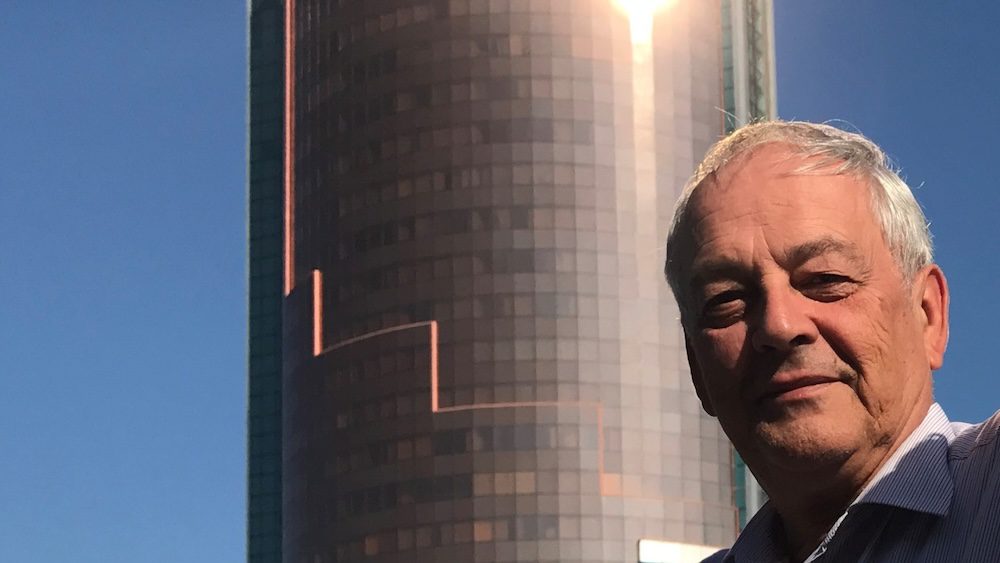
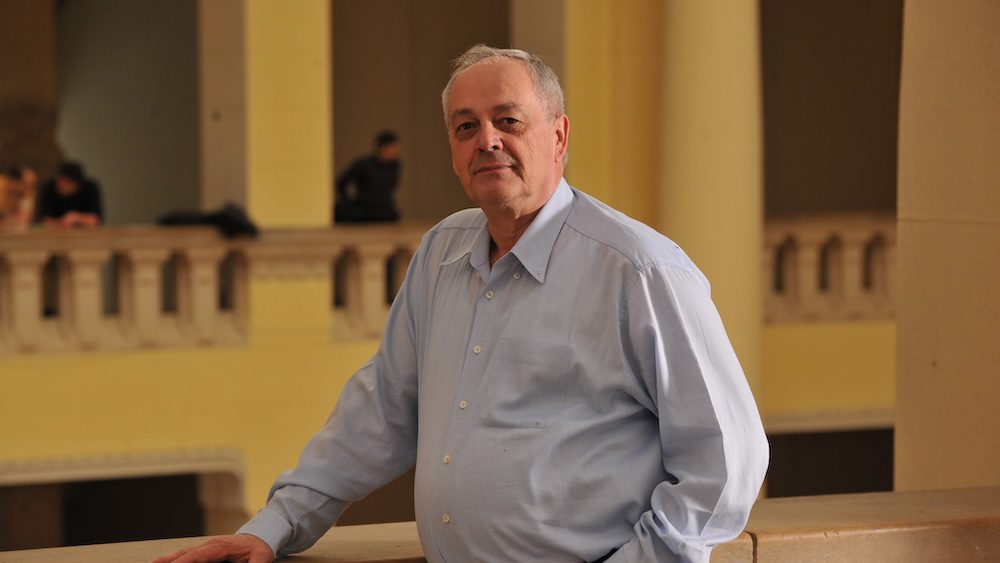
Although one of the most modern façade elements is glass, numerous problems can arise during the design process if the glass structures used have not been properly thought through. As to what makes these glass structures special, and why it is important for competent sector designers to deal with these building elements even during planning, we spoke with chartered architect György Mihály Stocker, reader in the BUTE Faculty of Civil Engineering, and vice-president of ALUTA.
If we are talking about glass structures and glass as a material, what is the first thing that you usually pass on to your students?

In the university, in the introductory lecture to the subject dealing with the design of glass structures, I always tell them that one of the modern façade elements in our days is glass. It is a very grateful material, as it may be shaped almost arbitrarily, it provides transparency, and it is recyclable. In connection with the use of glass structures, however, there is a great contradiction. Architects strive for transparency, so they would like to use as large a glass surface as possible. But the larger a glass surface is, the greater the problem. Due to solar exposure, the question of shading arises. True shading is always located on the external side, preventing the energy resulting from sunshine, as well as the powerful light effect causing glare, from getting into the interior space. Due to this, the glass surfaces practically disappear; when the shades are lowered the building is given a new architectural appearance. Fortunately, glass manufacturers have set out in the direction of developing tinted glass. Of course, this has its difficulties too. It is like looking at the world through sunglasses. The protection is provided by a very fine coating of a metallic nature. This discolours the glass, so the light transmission is reduced and at the same time the refection from the outer side of the glass is increased, it will glint.

Besides this, in my lectures I always touch on load-bearing glass structures too. These work like secondary load-bearing structures in the façade. In this case, the glass structure is not only the shell of the building, the external delimitation, but it also shores up the building. We are working on constructing buildings like this now, several projects have already been completed with the concept.

What types of structures provide the load bearing in these? And how should an architect relate to the design of these?

Glass beams and glass support structures are produced for these buildings, which in general are clear glass, so the shading problem mentioned above does not arise. The shell framework, however, which these are added to, does cause trouble. I always say that today, architects should actually be polyhistors. They should be familiar with all the materials to be used in the building in sufficient depth, in order to add them to the design properly. Today, architects have the practice of assigning the various insulations, water, groundwater, soil moisture, other insulations, which get into the ground, they always assign those to special sector designers. Well yes, but in connection with glass structures, which is likewise a special topic, this is not the case. They try to solve the problems themselves, though this structure is more than a water insulation. It works as a facing, as water insulation, and it is also airtight, but what is most important, it has a special aesthetic, which can be implemented in many ways in knowledge of the material. The water insulation in the ground cannot be seen, it has no aesthetic. Glass structures are especially important architectural elements in our buildings, but architects try to “mess about” with them themselves, instead of consulting with or assigning them to a specialist designer. This is also why architects and engineers would need a special course. Within the civil engineering faculty I am “spreading the word”, which has also had certain results, as maybe only a few, but some of the final year students have found jobs with glass structure manufacturers and processors, where they can actually do useful work and they can collaborate efficiently in the production of these special structures.

Employees of KAV have often experienced that even for exclusive family homes, they are given design materials which as far as glass structures, windows and doors are concerned, they do not reach the standard otherwise represented by the house. Could the reason for this be, what you just mentioned?

Yes, the reason for this is that during planning, these is no competent expert who can deal with this subject in greater depth. No associate designer with special technical skills is involved. Let’s not go into the matter of load-bearing glass structures now, as even when designing a normal curtain wall, questions may arise in which competent decisions must be made. Today there is the practice that architects approach various system distributors at such times, and ask them for advice and help even in such questions as sizing the necessary structures, rib depth, rib thickness. This should not be a job for a system distributor, but for a sector designer, of which there are still only a few at the moment. You have to understand the architect’s thinking, what he would like to achieve with the given façade.

Or, that the design concept should not be damaged by incorporating certain glass surfaces?

Exactly. Practically, this is the other important thing I have to say to my present engineer colleagues. It is important for them to be familiar with the various structures, but you have to go further, they have to understand architectural thinking in order to be able to help during planning. There are several system distributors working in Hungary, and you have to be able to choose from them, which one is suitable for the solution, which one can best help the appearance thought out by the architect. It is real art. During my career as a teacher, one of the most important things to say has always been that a building will only be good if the architect’s conception can be helped by the support structure designer, the electrics designer, the façade designer, and so on. The other important thing is construction, when a building comes to fruition. Experts who collaborate in implementation come from two Faculties of the Budapest University of Technology and Economics: the Faculties of Civil Engineering and Architecture. For implementation, it is also necessary to understand the architect’s conception in depth. For instance, you have to be able to read a drawing. After all, what is our common language? The drawing! Today, everyone works on computers. There is one problem with this, the computer is very rigid, but precise. I usually say that I am accredited up to A3, so I produce A3 drawings by hand, these are worked out by my colleagues, which often takes significantly longer than working out the idea with freehand drawing.

If we are talking about designing and the design process. What do you think determines freedom of design in Hungary today? The site, the customer’s requirement, market trends…

In Hungary, the budget most of all. But it is precisely the designer’s freedom to always find the appropriate configuration within the given limits. In today’s architecture, every architect is striving for self-fulfilment, which is a good trend, everyone would like to design a good, unique building, architecturally thought out. It is important to actualise a fine architectural conception, but it is not certain that a given architect is able to assess the financial impact. Planning to a given historical cost is very, very difficult, particularly in today’s world. It is a fine art. Furthermore, I think that Hungarian architects are as good as the foreign ones. Very fine buildings are also built to Hungarian designs, and we also see that there are foreign star architects, whose work is not certain to be going in the best direction. Of course, the opportunities for foreign experts may often exceed those of a Hungarian. It is also general experience, that if a foreign architect is operating in this country, the investor doesn’t really try to curtail his thoughts, in contrast to a Hungarian architect. With the House of Music I had a first experience, which is a rarity: with the aid of the Client, the project developed further in terms of the glass structures. It did not stay within the Hungarian construction budget, but exceed it. For this, the Developer/Client had to realise that a much greater building would be the result, if it became the structure which was finally executed. I tracked and helped with this building as expert designer from the beginning. At the beginning, the primary consideration was for us to take Hungarian manufacturing options into account. Finally this had to be let go, so that the presently visible solution could be realised. But, for instance, there is the Hungarian designed Museum of Ethnography, which is just as unusual a structure as the House of Music. In order for buildings of such a standard to be constructed, an architectural conception is not enough, it is also important to bring in expert designers and for the developer/client to have an open mind.

The architectural design of glass structures demands special expertise
01
00
Stocker-Gyorgy-BME
Stocker-Gyorgy-BME
MoreNews
01
020
2022 / 01 / 06
Schuco-aluminium-toloajto-ablak-emelo-tolo-KAV-uveg-uveg-sarok-minimal-house-kulter-udvar-terasz-exterior
Aluminium doors and windows in KAV quality, at an affordable price
With the KAV Home product range, our company is making high-quality aluminium doors and windows available to a new customer base. We talked to Zoltán Balázsi, sales engineer, and Károly Lovász, the Executive Director of KAV, about why this opening is important in the life of KAV and why it is worth buying aluminium doors and windows at KAV.
Show more
2022 / 07 / 04
Aluta-Nívódíj-2022-KAV
The ALUTA awarded two KAV buildings
After the successes of recent years, this year two KAV buildings were honored with the only recognition of Hungarian aluminum door and façade manufacturers, ALUTA Nívódíj. In the small project category, which includes residential buildings, the KAV project "Költőkert" in Mártonhegy, Budapest, was awarded the ALUTA Nívódíj. In the large foreign project category, our solutions for the Marriott Hotel in Iceland were recognized.
Show more
2018 / 12 / 12
kav-closing-systems-also-in-iceland
KAV closing systems also in Iceland
It has been a well-kept secret for a long time, and today many in the facade and structure building business are also talking about KAV’s new undertaking. Aluminium closing system products manufactured according to special customer demands are not only interesting due to their specific technical and weather requirements but also because of the installation location.
Show more
2022 / 11 / 17
Rotterdam-tarsashaz-udvari-homlokzati-reszlete-a-viz-fele
A medieval world built on stilts in the shadow of glass towers
The ALUTA, as the only domestic professional association of aluminum facade builders and window manufacturers in Hungary, organizes annual domestic and international study trips for its members. This year, our foreign trip took us to the Netherlands, a country with nearly 18 million inhabitants. Thanks to excellent organization, we were able to visit a significant number of unique buildings during our journey. Our team focused on exploring the cities of Amsterdam and Rotterdam, where a unique blend of European and colonial history, art history, and engineering culture unfolded before our eyes.
Show more
2015 / 02 / 15
A facade is not a private matterv
I think this company has a sincere desire to do good. There's a precise company executive who really wants to do the best he can, and this desire affects the whole company. And that's what the customer sees.
Show more
2017 / 10 / 30
A minimalistic house with a view that cannot be destroyed
2017 / 05 / 10
KAV is amongst the most excellent companies in Hungary
KAV Hungária was awarded a prize in the Innovation and Ongoing Perfectioning and the Culture of Recognition categories in the Hungary’s Most Excellent Companies Award Programme.
Show more
2020 / 02 / 27
Tornóczky-Mónika-Alukönigstahl
The goal: carbon neutral buildings by 2050
In the context of climate change, the issue of environmental awareness is increasingly raised, not only in everyday life but also in the context of the built environment. We explored ways to minimize the carbon footprint of a building with architect Mónika Tornóczky, Product Manager at Alukönigstahl, as the Central European Representative for Schüco and Jansen.
Show more
2021 / 08 / 18
Lovász-Károly-KAV-Hungária
Impact of construction industry changes on the market for aluminium doors and windows
In the recent period, price increases and a shortage of raw materials have brought along significant changes in the construction industry. We discussed with Károly Lovász, Managing Director of KAV Hungária, how this affects the market for aluminium and custom doors and windows, and what KAV's customers should be prepared for.
Show more
2023 / 05 / 15
Reynaers-aluminium-nyilaszaro-Kenyeres-Laszlo-epitesz-latvanyterv
The Role of Windows in the Design Process, an Architect’s Perspective
Kenyeres László, a leading architect at the Archista architectural firm, believes that villa buildings can be considered small form factor public buildings. This is why he considers it crucial to consult with window and door specialists multiple times during the design process. This approach helps avoid situations where window and door companies have to "re-design" certain parts of the building during the construction phase.
Show more
2020 / 04 / 21
Schuco-Reynaers-aluminium-window-door-slide-glass-interior-fassaden-night3-k
A refined aesthetic for doors and windows
The popularity of the minimalist style in architecture is one of the reasons that aluminium doors and windows entered the family house sector. Applying the principle of “less is more” to architecture led architects and designers to use unique solutions and austere or transparent surfaces. In a minimalist home, simple shapes and forms help create an atmosphere of harmony, where space itself serves humanity.
Show more
2022 / 10 / 20
Reynaers-hifinity-minimal-interior-luxury-glass-keret-nelkuli-sliding-door
Huge glass walls in a villa with breathtaking features
The glass is the soul of the villa designed by architect Péter Koch, the head of Nara Studio. The unique, distinctive building achieves its floating effect through the almost endless glass surfaces, providing the owner with a perfect panoramic view and an unparalleled sense of connection with the environment. We asked the architect about the design process of the building and the collaboration between the various aspects of the project.
Show more
2022 / 02 / 11
Reynaers-alumínium-emelő-toló-ajtó-MasterPatio-sliding-door-külső-oldal-outside-render
Aluminium window and door development trends and tendencies
Ever-increasing dimensions, ever-increasing load capacity, automation and integration of structures. These are what Reynaers' staff see as the most striking trends in the development of aluminium windows and doors. We spoke to Zoltán Nagy, Head of Reynaers Aluminium Hungary, and Gergő Hajas, Sales Support Engineer at Reynaers Aluminium, about their experiences and trends they saw in 2021.
Show more
2021 / 06 / 22
Szabados-András-KAV-Hungária
Custom aluminium doors and windows in exclusive family homes
Recognising customer needs regarding high-quality aluminium door and window systems and finding solutions for them is one of the main trademarks of KAV Hungária. András Szabados, our company’s project coordinator, often thinks together with the architect and the client for months to create custom door and window solutions that meet the wishes of the clients, in terms of both their functionality and appearance.
Show more
2018 / 03 / 12
Every property is sold once
By now, a personal needs assessment by an engineer has become the trademark of our company. We facilitate this process, in that our customers who request a quote may decide on the question of closing systems on the basis of an objective and clear set of requirements.
Show more
2021 / 08 / 05
alumínium-nyílászáró-gyártás-Reynaers-Schüco-cnc-automatizálás-ipar40-ablakgyár-ablakgyártó-üzem-tárolás-üveg-üvegragasztás
This is how aluminium doors and windows are made
Wondering how an aluminium-framed window or door is manufactured? What happens in the machining centre? How are aluminium doors milled, reinforced, and machined in the production process? What is the size of glass surfaces that can be produced? And how to assemble a window?
Show more
2020 / 08 / 05
Andrey-Klymenko-Reynaers-Aluminium
Our goal is continuous growth
Belgium-based Reynaers is a leading European specialist in the development and marketing of innovative and sustainable aluminium solution for windows, doors, curtain walls, sliding systems. They are one of the leading players among main producers of aluminium systems on the markets they are present. On some markets they are a market leader in several product areas and on some others they want always be in the top three. The construction of the façade solutions for the Marriott Hotel Edition in Iceland was the first major joint project with our company, which has since been followed by several collaborations. Sustainability, innovation and tailor-made solutions are the key pillars of their specific corporate culture. We discussed key directions and opportunities for development with Andrey Klymenko, General Manager for Central and Eastern Europe at Reynaers Aluminium.
Show more
2018 / 12 / 19
Hamburg-ALUTA-szakmai-tanulmányút-épület-látogatás
Old buildings with a new function
Hamburg, the third busiest port town in Europe, was the destination of the professional trip organised for ALUTA (aluminium window and facade association) members, on which László Cserki and Károly Lovász represented KAV Hungária. We had a conversation with Károly Lovász about the German town’s urban and architectural concepts and one of the newest emblematic buildings of Europe, the Elbphilharmonie.
Show more
2023 / 01 / 26
Schüco-alumínium-tolóajtó-ablak-emelő-toló-KAV-üveg-üveg-sarok-Schlotterer-80D-raffstore-minimal-house-kültér-udvar-terasz-exterior-4
The issue of shading is becoming increasingly important
The changing economic environment and rising energy prices are also impacting the construction industry. But how might the market for premium segment windows change? According to KAV's CEO, Károly Lovász, the focus will shift towards the issue of shading, and it is crucial for builders to select companies with a stable background and a qualified workforce.
Show more
2023 / 01 / 02
Schüco-alumínium-emelő-toló-harmónika-ajtó-étterem-terasz-kapcsolat-homlokzat-sas-baba
A communal gastronomic space where the fusion of outdoor and indoor is facilitated by KAV glass portals
BABA Budapest is not merely a restaurant; it is a space where one can feel at home throughout the day. The main principles of design focused on the seamless transition between indoor and outdoor spaces and the creation of a genuine sense of community experience. We had the opportunity to discuss the BABA with its lead designer, Dóra Fónagy, while sitting at one of its tables, and during our conversation, we ourselves experienced why it provides a truly unique experience.
Show more