
INFORMÁCIÓ ÉS AJÁNLATKÉRÉS
INFORMATION AND QUOTATION
Vissza
Home > News > A medieval world built on stilts in the shadow of glass towers
A medieval world built on stilts in the shadow of glass towers

Rotterdam-tarsashaz-udvari-homlokzati-reszlete-a-viz-fele
2022 / 11 / 17

The ALUTA, as the only domestic professional association of aluminum facade builders and window manufacturers in Hungary, organizes annual domestic and international study trips for its members. This year, our foreign trip took us to the Netherlands, a country with nearly 18 million inhabitants. Thanks to excellent organization, we were able to visit a significant number of unique buildings during our journey. Our team focused on exploring the cities of Amsterdam and Rotterdam, where a unique blend of European and colonial history, art history, and engineering culture unfolded before our eyes.

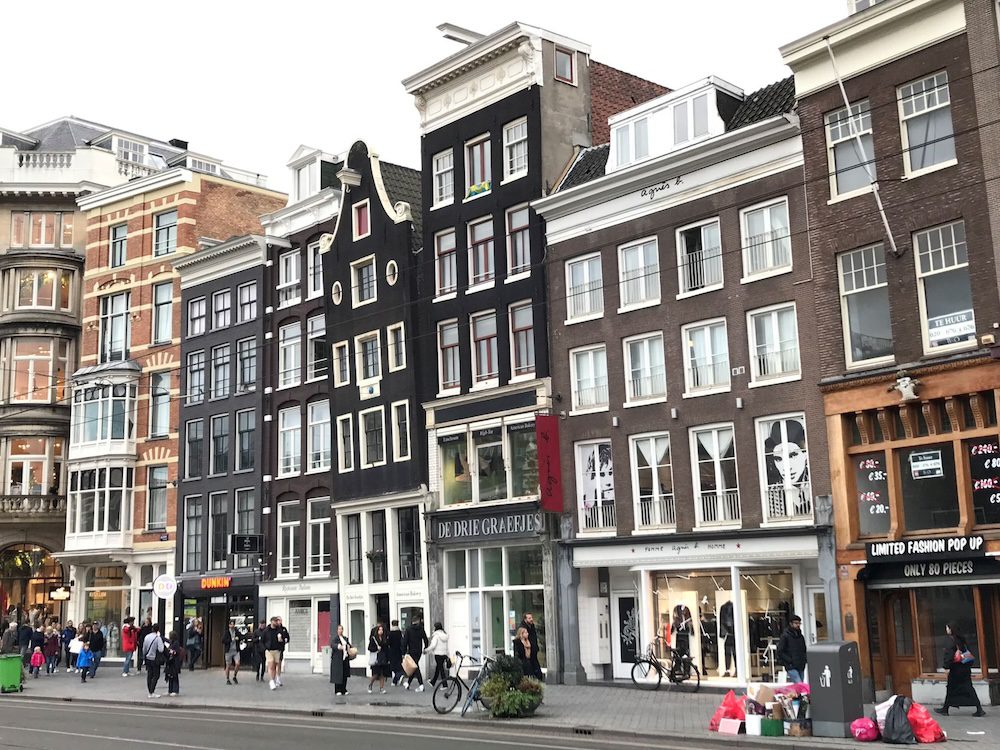
When we talk about cities built on stilts, most people immediately think of Venice. However, Amsterdam was also built in this manner, and to this day, it continues to be constructed this way. Its mostly below-sea-level car-free city center, divided by navigable canals, showcases its quirky medieval houses that proudly bear the weight of centuries of historical storms. They have survived fires, plagues, and numerous floods, and here they are with us today. The sloping walls seem to whisper that this is how you transform a worthless marshland into a well-structured city with dikes, canals, warehouses, and a livable urban environment through engineering knowledge.

In the old town of Amsterdam and on the newly reclaimed land, we observed tram tracks, roads for motor vehicles, residential and office buildings, as well as waterways. This journey evoked feelings of reverence for history, diversity, value creation, extreme engineering expertise, and attention to detail. Upon our arrival, we immediately embarked on group walking and boat tours in the evening to gain essential insights into medieval architecture, building materials, urban planning, and the Dutch struggle with fire and water. It was fascinating to experience this urbanistic package where the external facade faithfully adheres to historical accuracy while the internal core reflects a world-class metropolis created through centuries of engineering culture.

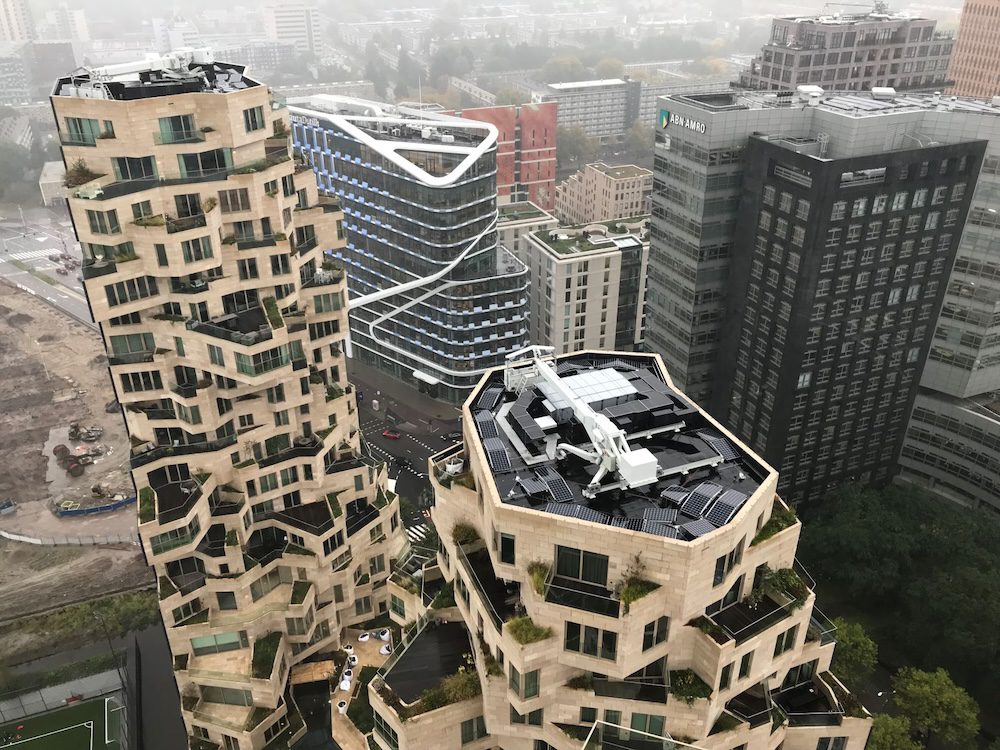
Our first full day was dedicated to Rotterdam, with a brief stop at the Walley Towers, a mix of Jenga-like massing and modern glass-facade skyscrapers. The special cladding materials, numerous balconies and terraces, as well as the structural use of glass, make this office and residential building unique. Even the smallest details were meticulously designed, although a layperson might not notice this at first glance, but it was evident to us. Upon entering the main entrance of the building, we encountered impressive design solutions, with wall and staircase cladding and intriguing forms conveying instant value. Walking further, a passage divided the arrivals, and above our heads, a structural glass ceiling with generous glass beams provided illumination. Every room, including communal and public spaces (such as the classic stairwells), was adorned with matching wall cladding and lighting, with special attention to color harmony. Thanks to the assistance of an interior design and sales company operating in the building, we were allowed to glimpse into one of their upper-level showrooms. From up there, we enjoyed a splendid view of the city’s tower buildings and their layout, at least to the extent that we could observe through the rain. Speaking of layout, it was an exciting experience to see how functions were managed side by side. Right next to our building, there were many multi-sports, artificial turf facilities, and the juxtaposition of elements with different uses did not feel intrusive at all. Such close construction is inconceivable in Hungary due to our driving and parking habits.

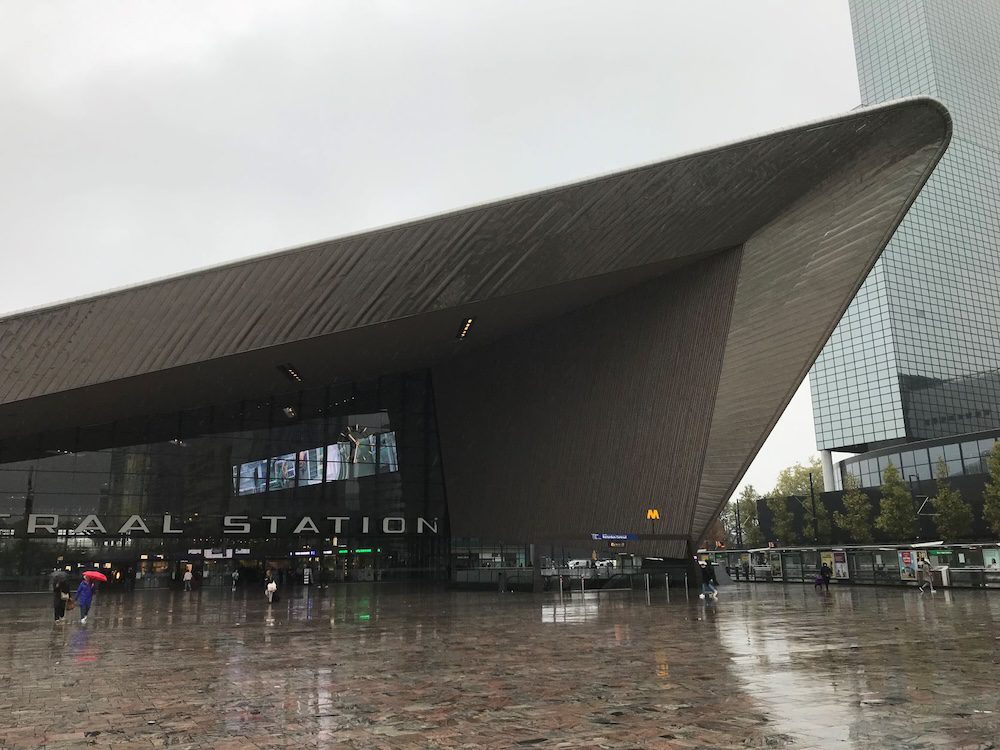
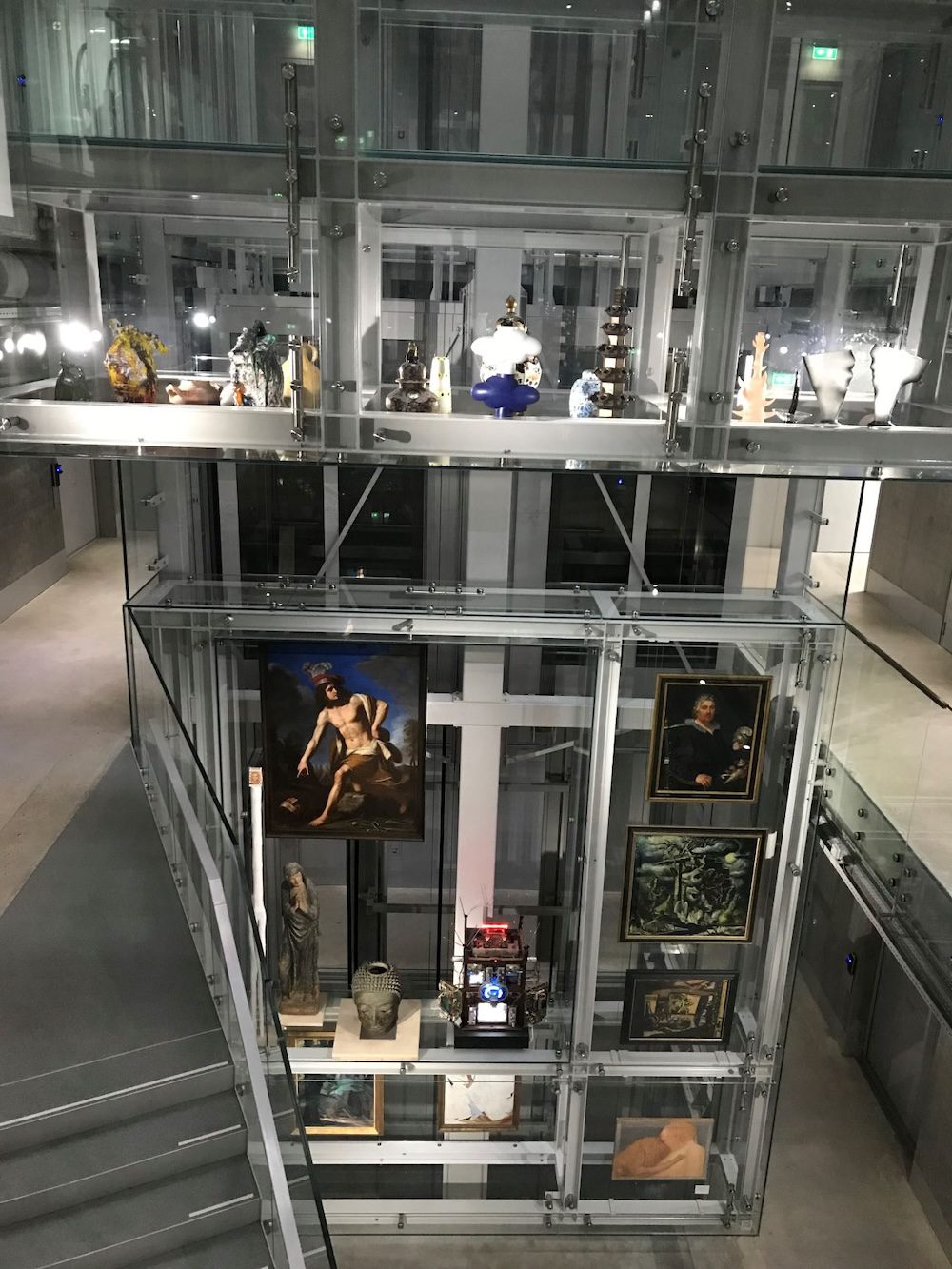
In Rotterdam, our architectural tour began at the city’s main railway station, featuring an impressive facade cladding that dignifies the already exceptional cube and glass walls. The materials used and their durability are demonstrated by the facade and interior glass envelope connected to the self-supporting JANSEN steel curtain wall system. It’s a work of art, a result of excellent design. This was followed by a visit to the unique Boijmans Van Beuningen Depot, a glass building with almost a circular footprint and a corrugated facade, seemingly inspired by an IKEA cup. Its function is highly unusual as it houses a modern fairytale museum storage base. The massive lifts, storage rooms, auditoriums, researcher and restorer workspaces are housed within a modern air and humidity-controlled concrete and glass cage system. As I walked through the interior, I couldn’t help but think of the magical school, Hogwarts, with its winding staircases, familiar from the Harry Potter films. In the meantime, various gags and modern and historical works of art rest in glass capsules or floating spaces, further capturing the attention of the already fascinated visitors. Occasionally, works of art are exhibited in a somewhat casual manner, but looking at the names of the artists often left us in awe. The most famous works of art were displayed as if they had been temporarily left there by loaders during lunch break. Of course, they are secretly guarded, but this presentation makes the masterpieces truly unique and more natural to the visitors.

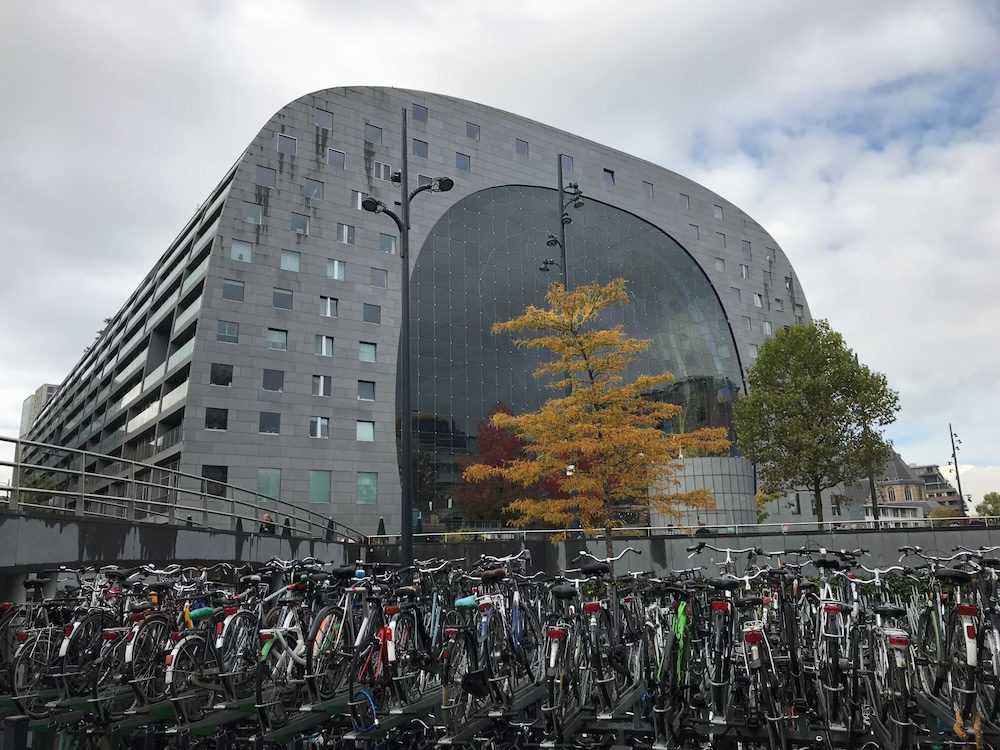
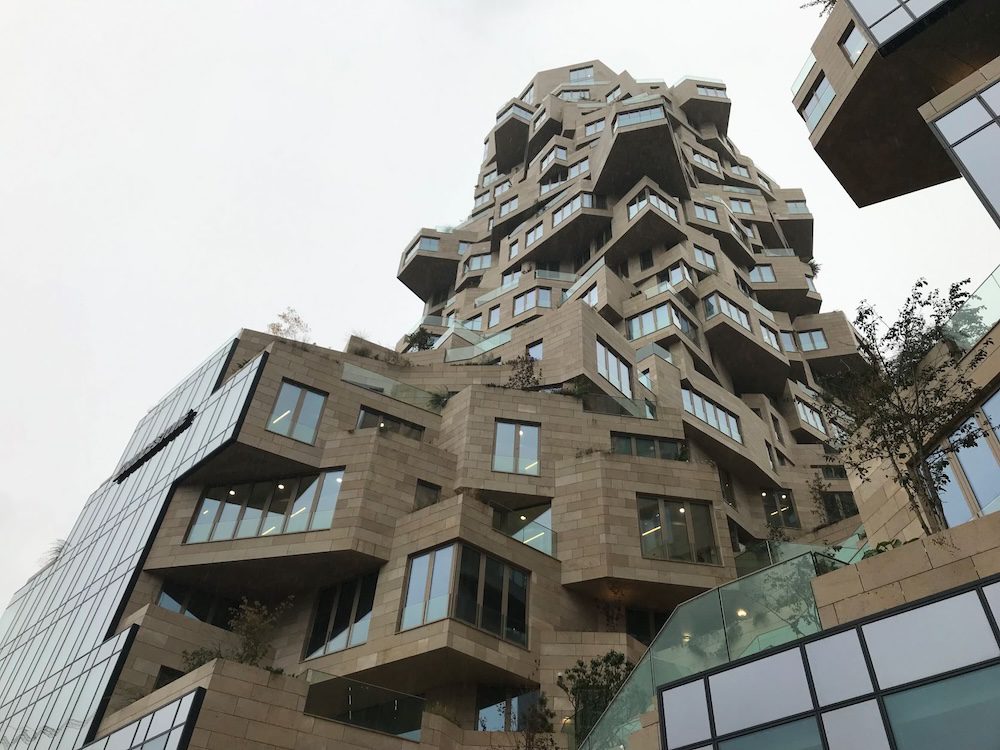
During lunchtime, we headed towards a special market building. The market hall is essentially a large street food exhibition, not hiding the fact that this is the belly of a residential building. Enormous point-fixed glazed facades dominate both of its curved gable sides. The tempered glass facade designed for large deflection provides the interior with sufficient light and a pleasant outdoor feel, while the ceiling cladding supports this with cheerful plotter-cut glass forms. Fixed windows towards the interior, along with balconies from the exterior, illuminate the apartments built around (and above) the market. Land is expensive in the Netherlands, so the orientation and a stepped arrangement towards the shore are used to make the most of the housing opportunities. After a quick lunch, we walked over to the “Cube Houses” (Kubuswoningen). The brainchild of architect Piet Blom, these houses are inspired by an “urban forest” concept. The tree trunks are symbolized by the supporting walls, while the treetops are represented by the cubes that house living spaces, oriented on their corners. One of the apartments was open to visitors, so we got a brief look inside. I wouldn’t recommend living here to just anyone, unless you enjoy daily challenges, as the narrow and steep stairs, small and dark living spaces, and the compromises they entail might not be to everyone’s liking. To me, this apartment was like the case of a giraffe in the zoo: “nice, but I wouldn’t want to live here.” At the end of our Rotterdam tour, we saved a visit to “De Rotterdam” for last. This high-rise is unique in its appearance, with majestic staggered volumes and magnificent views of the Erasmus Bridge from its luxurious interior spaces. (This bridge’s design – due to a new project by the UNStudio design office – may become familiar to Budapest as it will resemble the new bridge connecting Buda to Csepel over the Danube, although it has two pillars, it shares a striking resemblance.) This building stands out among the prestigious brick-clad residential buildings, featuring a facade characterized by repetitive elements and simplicity in design philosophy, which intrigued us. What makes this building “work”? What makes it both simple and complex at the same time? Perhaps an architect aims to convey this feeling to residents and visitors throughout their entire life. Here, this desire has been fulfilled, and “De Rotterdam” has set the bar high for its contemporaries.

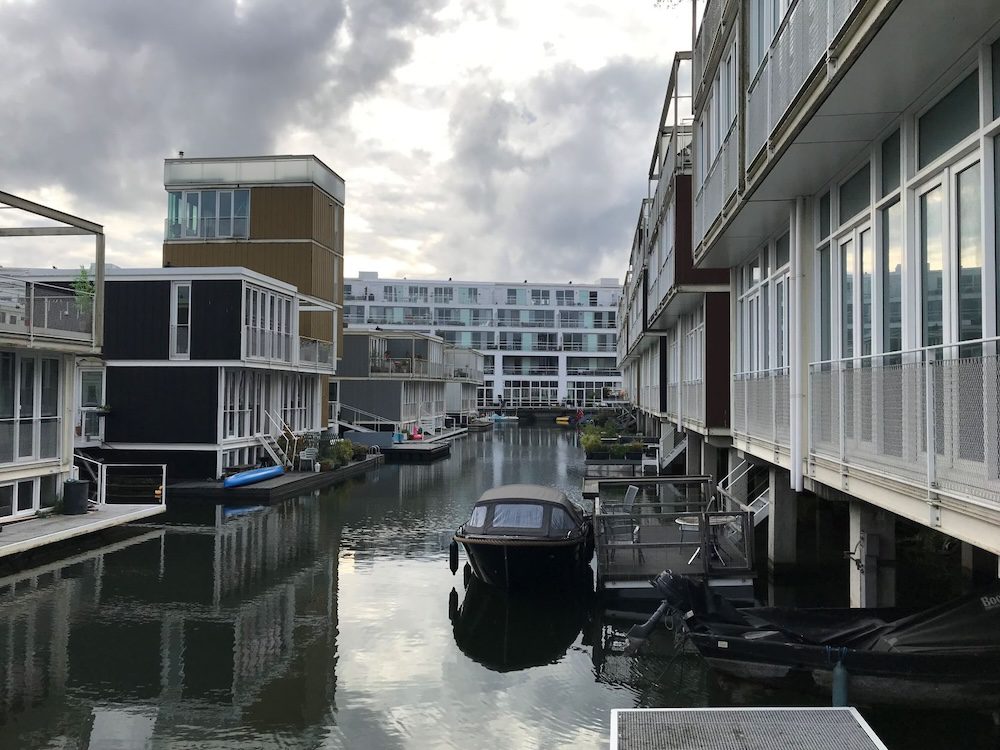
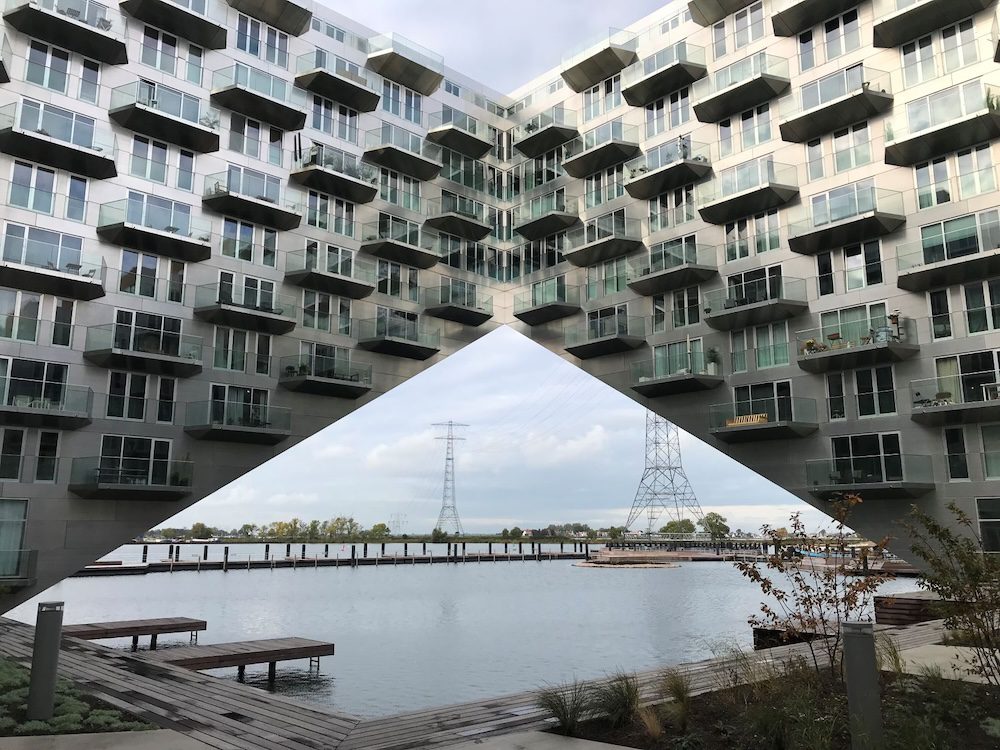
To conclude our detour in Rotterdam, we visited a futuristic apartment building extending over the water, with terraced facades facing the water. The nature of the building was not immediately apparent upon arrival, as the terraced arrangement, the neatness of the wooden and aluminum cladding, and the alignment of the balconies might not seem that extraordinary at first glance. However, upon entering the inner courtyard, a complete transformation occurred in our minds. What was missing from the mass facing the waterfront became the inverse form projecting towards the water. A small garden or terrace accompanying a home is a precious and valued feature in the Netherlands, and the architects have accommodated this need with orientation and stepped shoreline design. Simultaneously, the courtyard facing the water features comfortable seating areas and piers that pay homage to the dominant liquid element. The raw aluminum cladding significantly offsets the overwhelming homogeneity with raw aluminum windows and compensates for it with protrusions and breaks caused by the glistening glass railing balconies. Observing the intimate atmosphere of the inner courtyard, we realized that it might be somewhat overshadowed by the noise reflected from the metal cladding, especially during the weekend when children living here play loudly. In this context, Dutch acceptance and patience are essential.

It was exciting to see the “floating” container homes, located near the staircase building, extending into the water. This is an inexpensive but compromise-filled way of living where, for a century, the most practical means of transportation (bicycles and boats) have been used. Generally chaotic, but sometimes very organized, the residents go about their daily lives in these close quarters, accessible via floating pathways. However, for average Hungarians who are accustomed to fences, curtains, or blinds, this living arrangement seemed a bit too transparent. It appears that average Dutch people have nothing to hide or, for some reason, are more open about their private lives, and it was clear to us that they do not fear judgment from others about their lifestyle. This societal credo is palpable and is also present in everyday architecture. This is reinforced by the transparent arrangement of windows and glass facades in new buildings.

On the day of our return journey, we remained in Amsterdam, where we explored the medieval past, identity, transportation model, and general way of life through a city walk. We also had some time for architectural history exploration, walking among the most famous historical landmarks in the canals. Before our return flight, we had a little free time, so taking advantage of online ticket booking, a few of us visited the fantastic exhibition halls of the Rijksmuseum. My favorite, Rembrandt’s Night Watch, and the impressive artworks, allowed me to truly grasp the influence of Dutch colonial history on economics, outlook on life, gastronomy, missionary zeal, and art. Nothing happens by chance, and the immeasurable value accumulated and blossomed over centuries means nothing in a country that is half the size of Hungary and one-third of it is below sea level without constant renewal and restructuring after disasters, respected engineering foresight, and a demand for technical solutions that cover everything, all embedded in a culture of coexistence.


A medieval world built on stilts in the shadow of glass towers
01
00
Walley-Towers-utcai-kep
Walley-Towers-kilatas-a-magasabb-toronybol
Rotterdam-uszo-hazak
Amszterdam-ovaros-utca-reszlet
Rotterdam-fopalyaudvar-homlokzata-toronyepulet
Rotterdam-piac-csarnok-utcai-homlokzata-az-uvegfallal-es-erkelyekkel
Piet-Blom-kockahazak-utcai-homlokzat
Depot-Boijmans-Van-Beuningen-taroloba-rejtett-csodak-a-pihenokben-is
De-Rotterdam-homlokzat-beka-perspektiva
Depot-Boijmans-Van-Beuningen
MoreNews
01
020
2021 / 10 / 21
Aluminium curtain wall with arches and large glass surfaces
The design was one of the biggest challenges in the production and installation of the aluminium doors and windows of the Reformed Kindergarten in Svábhegy, since more than 700 individual solid angles had to be calculated to create the aluminium curtain wall, which was not only a segmental arch, but also broken at the bottom and top edges. We talked about this process with Zoltán Erdélyi, KAV’s senior engineer.
Show more
2022 / 07 / 04
JANSEN-acél-nyílászáró-homlokzat-ablak-íves-hőhídmentes
The Application Possibilities of Steel Windows and Doors in Family Homes
With the changing architectural trends in residential buildings, larger glass surfaces are becoming increasingly prevalent in properties, while the size requirements of frame structures are decreasing. As a result, the use of steel windows and doors, which were previously mainly present in communal construction culture, is now being considered more frequently. We spoke with Mr. Károly Lovász, the Managing Director of KAV Hungária, to discuss when it is advisable to choose steel windows and doors instead of aluminum ones and what this product category has to offer.
Show more
2019 / 01 / 09
Schüco-alumínium-keret-nélküli-tolóajtó-PD77-slide-door-frameless-üvegfal-üveg-üveg-sorolás-nappali-beltér-interior-night
Reflecting the environment with closing systems
The KAV approach helped a lot in its implementation. They talk to the customer and they don't want to sell a product, they want to answer questions and look for a solution. I did not have to choose from a catalogue, so I was not forced to choose from a set of solutions, but was offered individual solutions to a given problem. Of the companies I worked with, KAV gave me the most technical support.
Show more
2023 / 03 / 30
Reynaers-hifinity-minimal-interior-kitchen-glass-frame-sliding-door-luxury
Do we need large glass surfaces everywhere?
Our colleagues are increasingly encountering residential building plans in which large glass surfaces dominate. These concepts are understandable not only from a design perspective but also because of transparency, connection with the environment, and the continuous influx of light. However, in many cases, they cannot be realized, or they require significantly higher investments and more complex alterations to the plans. In our new series, we explore the topic of the dimensions of glass surfaces with Mr. Károly Lovász, the CEO of KAV, and Mr. Csaba Mravik, the Chief Development Engineer.
Show more
2021 / 04 / 22
Schüco-alumínium-erkélyajtó-ablak-ü
ALUMINIUM DOORS AND WINDOWS AND THE KAV HOME
For a long time, aluminium doors and windows were just the privilege of communal buildings, offices and the exclusive family home market. KAV Home was created to provide a value-for-money solution for customers who have never dared to dream of aluminium doors and windows. Trends and solutions are also available with these products, which are very well adapted to the customer’s needs.
Show more
2021 / 05 / 21
Lovász-Károly-KAV-Ügyvezető
Aluminium doors and windows with custom solutions
The founding of KAV Hungária was also triggered by an innovative idea: why not introduce aluminium doors and windows to the family home market? Since then, our own developments, individual solutions, needs assessment and construction work organisation have become the defining elements of the company. Károly Lovász, the managing director of KAV, Gábor Csóti, the founder of the Gamechangers community and Kálmán Szabó, the host of the podcast by the Association for Excellence Public Benefit Association, spoke about innovation, the underlying managerial thinking and organisational structure.
Show more
2020 / 03 / 30
we-will-come-out-of-this-situation-even-stronger
We will come out of this situation even stronger
Measures to curb the coronavirus epidemic have created unexpected situations in almost every area of our lives and economies. In this situation, how can we put in place competitive, proactive, and workable, yet effective procedures to serve customer needs? Károly Lovász, Managing Director of the company, reports on the changes at KAV.
Show more
2021 / 01 / 14
Csóti-Gábor
Aluminium doors and windows and a flexible business model
As a company specialised in custom doors and windows, KAV is constantly striving for innovation and renewal, while maintaining the values it is worth building on. As a member of the Gamechangers professional community, we strive to share best business and organisational practices. We talked to the founder of the initiative, Gábor Csóti, about how the coronavirus epidemic has changed the operation of businesses and
Show more
2018 / 11 / 14
Schuco-aluminium-keret-nelkuli-frameless-PD77-AWS75-ASE80-motoros-toloajto-fuggonyfal-curtain-wall-minimal-exterior
Facade structures for full transparency
Curtain walls connect several large glass surfaces into a single structure, many times in an invisible manner. Initially these elements were exclusively used in communal building technology but, with the penetration of the minimalistic style, it also appeared in the family home segment. Today it is the most dynamically developing branch of the closing structure market, in that these surfaces are suitable for individual solutions where only the imagination of the client and the designers can set the boundaries.
Show more
2019 / 08 / 29
Schüco-alumínium-keret-nélküli-tolóajtó-frameless-slide-door-porsche-design-PD77-minimal-house-exterior-lemezburkolat-lemez-homlokzat-panel
For a smart home, product selection is key
For a newly built property, in terms of windows and doors, one of the most important questions is whether prospective residents would like a building management system in the house, as all solutions need to be tailored to this in the design phase. For today's systems, system-specific connector units and auxiliary modules must already be planned and positioned so that they can remain completely hidden.
Show more
2022 / 02 / 24
Alumínium-nyílászáró-ablak-ajtó-tolóajtó-gyártó-iroda-KAV-Hungária-igényfelmérés-egyeztetés-ajánlatadás-mérnök-munka
Aluminium window trends based on customer needs
When it comes to aluminium windows and doors, the name ‘KAV’ has become associated with custom client needs. Many of the ideas and plans that come to our attention can lead later on to the development of aluminium windows and doors. So, if we want to present the trends for 2022, it is worth starting with what Károly Lovász, Managing Director of KAV, and Csaba Mravik, Chief Development Engineer, have experienced and what products are now being sought by builders of family homes.
Show more
2021 / 01 / 06
Schüco-alumínium-ASE80-tolóajtó-egy-sínes-minimal-interior-3
The relationship between unique doors and windows and interior design
Unique windows and glass walls are playing an increasingly important role in modern family homes, so working together requires a different approach from both designers and window-door professionals than it did a few years ago. According to Csaba Finta, interior designer and art director of MYD-II, it is important that architects and interior designers take this aspect into account during the planning stage.
Show more
2017 / 12 / 20
Ethical operations raise even SMEs to the top
Following the large enterprise sector, operating ethically is becoming increasingly important for small and medium-sized enterprises, too. These companies not only take into account the interests of their clients and suppliers but also those of their environment and employees. They set an example by their activity and attitude and strengthen trust. This attitude may constitute a basis for long-term operation and economic stability, and what is more, employees of the Y and Z generations are more eager to opt for an ethically operating workplace.
Show more
2022 / 12 / 20
Reynaers-Schuco-hifinity-minimal-uvegfal-keret-nelkuli-tolo-lamellas-arnyekolo
A flawless building with KAV windows and doors
The panorama is the soul, and the glass surfaces are one of the main organizing elements of the exceptional villa that the Etna and KAV teams worked on together. We discussed the building's features and the process of realization with Nikos Zizidis, the CEO of Etna Kft., the construction company responsible for the project.
Show more
2021 / 06 / 02
alumínium-nyílaszáró-ablak-ajtó-tolóajtó-keret nélküli-üveg-üvegszerkezet-Schüco-Reynaers-szakági-tervezés-műszaki előkészítés-mérnökiroda
Architectural design of aluminium doors and windows in our time
The aim of the KAV team is to provide our customers with all the solutions for their unique doors and windows needs, whether it may be a minimal window, a frameless sliding door, an aluminium front door, a blind or even a curtain wall. Most customers start looking for windows when they already have the finished designs, but we increasingly often see, during the consultations, that these designs are not detailed enough. We talked about the correlation between architectural designs and the door and window solutions with Csaba Mravik, KAV Hungária’s chief development engineer of.
Show more
2018 / 12 / 19
Hamburg-ALUTA-szakmai-tanulmányút-épület-látogatás
Old buildings with a new function
Hamburg, the third busiest port town in Europe, was the destination of the professional trip organised for ALUTA (aluminium window and facade association) members, on which László Cserki and Károly Lovász represented KAV Hungária. We had a conversation with Károly Lovász about the German town’s urban and architectural concepts and one of the newest emblematic buildings of Europe, the Elbphilharmonie.
Show more
2017 / 10 / 26
KAV received an ALUTA Award of Excellence again
In the “Small project” (i.e. residential building) category KAV received the 2017 ALUTA Award of Excellence for the special facade of its Zugliget family home reference, for its engineering work and implementation.
Show more
2017 / 09 / 05
We build for the future rather than for today
Clear shapes, large glass surfaces, spacious interior spaces and creative use of materials – these are the main features of the most predominant architectural style of our era, minimalistic design, in which interest is outstanding in Hungary. However, the number of really well designed and built minimalistic family homes is relatively low. The property our engineers consider as one of the best designed ones our company has met in recent years was built in Budapest. During the project we paid increased attention to the design of large, liberally designed glass surfaces, essential for creating open spaces. We had a conversation with the developer of the house about what was needed to create this property.
Show more
2020 / 05 / 27
KAV-OPTIVISION-BROSSÚRA
Professional and readable content on the new KAV website
A notable feature of the market for custom doors and windows is that professionals, construction operators and property owners are equally curious about our products and innovative solutions. This was our guiding principle during the development of our new website; the final design follows the layout of quality magazines, while our text-based content aims to provide readers with useful information.
Show more