
INFORMÁCIÓ ÉS AJÁNLATKÉRÉS
INFORMATION AND QUOTATION
Vissza
Home > News > The architectural design of glass structures demands special expertise
The architectural design of glass structures demands special expertise

Stocker-György-BME
2022 / 08 / 18

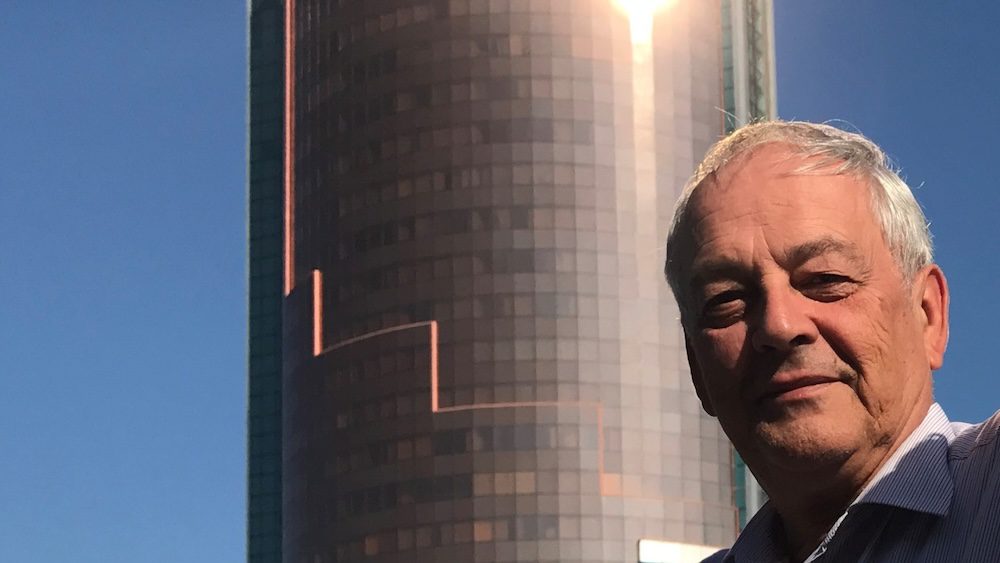
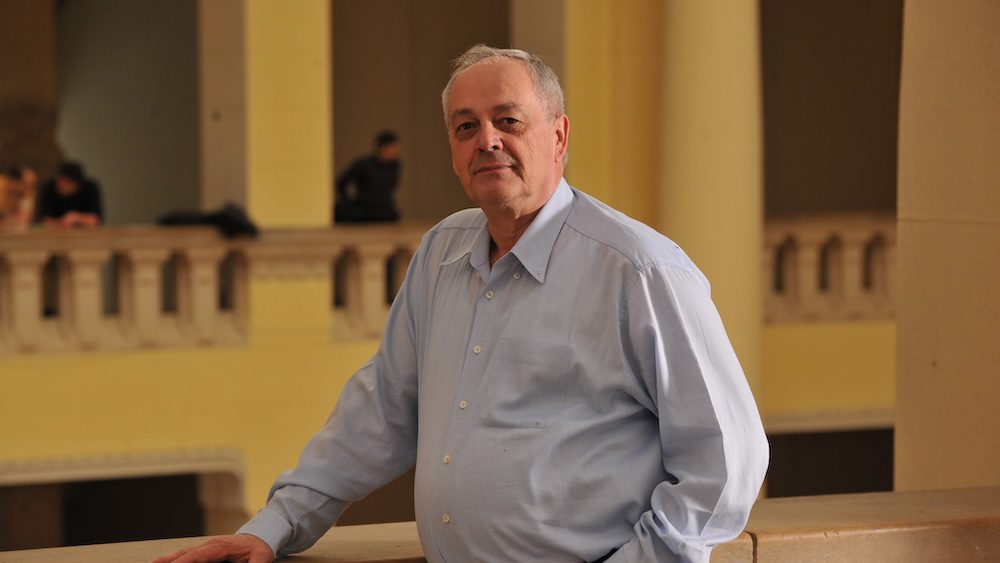
Although one of the most modern façade elements is glass, numerous problems can arise during the design process if the glass structures used have not been properly thought through. As to what makes these glass structures special, and why it is important for competent sector designers to deal with these building elements even during planning, we spoke with chartered architect György Mihály Stocker, reader in the BUTE Faculty of Civil Engineering, and vice-president of ALUTA.
If we are talking about glass structures and glass as a material, what is the first thing that you usually pass on to your students?

In the university, in the introductory lecture to the subject dealing with the design of glass structures, I always tell them that one of the modern façade elements in our days is glass. It is a very grateful material, as it may be shaped almost arbitrarily, it provides transparency, and it is recyclable. In connection with the use of glass structures, however, there is a great contradiction. Architects strive for transparency, so they would like to use as large a glass surface as possible. But the larger a glass surface is, the greater the problem. Due to solar exposure, the question of shading arises. True shading is always located on the external side, preventing the energy resulting from sunshine, as well as the powerful light effect causing glare, from getting into the interior space. Due to this, the glass surfaces practically disappear; when the shades are lowered the building is given a new architectural appearance. Fortunately, glass manufacturers have set out in the direction of developing tinted glass. Of course, this has its difficulties too. It is like looking at the world through sunglasses. The protection is provided by a very fine coating of a metallic nature. This discolours the glass, so the light transmission is reduced and at the same time the refection from the outer side of the glass is increased, it will glint.

Besides this, in my lectures I always touch on load-bearing glass structures too. These work like secondary load-bearing structures in the façade. In this case, the glass structure is not only the shell of the building, the external delimitation, but it also shores up the building. We are working on constructing buildings like this now, several projects have already been completed with the concept.

What types of structures provide the load bearing in these? And how should an architect relate to the design of these?

Glass beams and glass support structures are produced for these buildings, which in general are clear glass, so the shading problem mentioned above does not arise. The shell framework, however, which these are added to, does cause trouble. I always say that today, architects should actually be polyhistors. They should be familiar with all the materials to be used in the building in sufficient depth, in order to add them to the design properly. Today, architects have the practice of assigning the various insulations, water, groundwater, soil moisture, other insulations, which get into the ground, they always assign those to special sector designers. Well yes, but in connection with glass structures, which is likewise a special topic, this is not the case. They try to solve the problems themselves, though this structure is more than a water insulation. It works as a facing, as water insulation, and it is also airtight, but what is most important, it has a special aesthetic, which can be implemented in many ways in knowledge of the material. The water insulation in the ground cannot be seen, it has no aesthetic. Glass structures are especially important architectural elements in our buildings, but architects try to “mess about” with them themselves, instead of consulting with or assigning them to a specialist designer. This is also why architects and engineers would need a special course. Within the civil engineering faculty I am “spreading the word”, which has also had certain results, as maybe only a few, but some of the final year students have found jobs with glass structure manufacturers and processors, where they can actually do useful work and they can collaborate efficiently in the production of these special structures.

Employees of KAV have often experienced that even for exclusive family homes, they are given design materials which as far as glass structures, windows and doors are concerned, they do not reach the standard otherwise represented by the house. Could the reason for this be, what you just mentioned?

Yes, the reason for this is that during planning, these is no competent expert who can deal with this subject in greater depth. No associate designer with special technical skills is involved. Let’s not go into the matter of load-bearing glass structures now, as even when designing a normal curtain wall, questions may arise in which competent decisions must be made. Today there is the practice that architects approach various system distributors at such times, and ask them for advice and help even in such questions as sizing the necessary structures, rib depth, rib thickness. This should not be a job for a system distributor, but for a sector designer, of which there are still only a few at the moment. You have to understand the architect’s thinking, what he would like to achieve with the given façade.

Or, that the design concept should not be damaged by incorporating certain glass surfaces?

Exactly. Practically, this is the other important thing I have to say to my present engineer colleagues. It is important for them to be familiar with the various structures, but you have to go further, they have to understand architectural thinking in order to be able to help during planning. There are several system distributors working in Hungary, and you have to be able to choose from them, which one is suitable for the solution, which one can best help the appearance thought out by the architect. It is real art. During my career as a teacher, one of the most important things to say has always been that a building will only be good if the architect’s conception can be helped by the support structure designer, the electrics designer, the façade designer, and so on. The other important thing is construction, when a building comes to fruition. Experts who collaborate in implementation come from two Faculties of the Budapest University of Technology and Economics: the Faculties of Civil Engineering and Architecture. For implementation, it is also necessary to understand the architect’s conception in depth. For instance, you have to be able to read a drawing. After all, what is our common language? The drawing! Today, everyone works on computers. There is one problem with this, the computer is very rigid, but precise. I usually say that I am accredited up to A3, so I produce A3 drawings by hand, these are worked out by my colleagues, which often takes significantly longer than working out the idea with freehand drawing.

If we are talking about designing and the design process. What do you think determines freedom of design in Hungary today? The site, the customer’s requirement, market trends…

In Hungary, the budget most of all. But it is precisely the designer’s freedom to always find the appropriate configuration within the given limits. In today’s architecture, every architect is striving for self-fulfilment, which is a good trend, everyone would like to design a good, unique building, architecturally thought out. It is important to actualise a fine architectural conception, but it is not certain that a given architect is able to assess the financial impact. Planning to a given historical cost is very, very difficult, particularly in today’s world. It is a fine art. Furthermore, I think that Hungarian architects are as good as the foreign ones. Very fine buildings are also built to Hungarian designs, and we also see that there are foreign star architects, whose work is not certain to be going in the best direction. Of course, the opportunities for foreign experts may often exceed those of a Hungarian. It is also general experience, that if a foreign architect is operating in this country, the investor doesn’t really try to curtail his thoughts, in contrast to a Hungarian architect. With the House of Music I had a first experience, which is a rarity: with the aid of the Client, the project developed further in terms of the glass structures. It did not stay within the Hungarian construction budget, but exceed it. For this, the Developer/Client had to realise that a much greater building would be the result, if it became the structure which was finally executed. I tracked and helped with this building as expert designer from the beginning. At the beginning, the primary consideration was for us to take Hungarian manufacturing options into account. Finally this had to be let go, so that the presently visible solution could be realised. But, for instance, there is the Hungarian designed Museum of Ethnography, which is just as unusual a structure as the House of Music. In order for buildings of such a standard to be constructed, an architectural conception is not enough, it is also important to bring in expert designers and for the developer/client to have an open mind.

The architectural design of glass structures demands special expertise
01
00
Stocker-Gyorgy-BME
Stocker-Gyorgy-BME
MoreNews
01
020
2018 / 10 / 17
Schüco-alumínium-keret-nélküli-tolóajtó-frameless-slide-door-porsche-design-PD77-minimal-house-interior-nappali-beltér
The house that fascinates with its clean simplicity
Premium, minimalistic, clean simplicity – these are the adjectives that immediately come to our mind seeing the residential property dreamt on the basis of the Porsche design. The building was implemented after a design process, unusual from an architect’s point of view, since the developer arrived with very specific plans and designs. We talked about this extraordinary work with the architect, István Unicsovics.
Show more
2019 / 10 / 03
Ádám-István-Alukönigstahl
We make our decisions based on local characteristics
Our cooperation is very good, and I think it is very important that both sides work transparently. You have to think of it as shared engineering thinking and a creative process as we work together.
Show more
2021 / 06 / 02
alumínium-nyílaszáró-ablak-ajtó-tolóajtó-keret nélküli-üveg-üvegszerkezet-Schüco-Reynaers-szakági-tervezés-műszaki előkészítés-mérnökiroda
Architectural design of aluminium doors and windows in our time
The aim of the KAV team is to provide our customers with all the solutions for their unique doors and windows needs, whether it may be a minimal window, a frameless sliding door, an aluminium front door, a blind or even a curtain wall. Most customers start looking for windows when they already have the finished designs, but we increasingly often see, during the consultations, that these designs are not detailed enough. We talked about the correlation between architectural designs and the door and window solutions with Csaba Mravik, KAV Hungária’s chief development engineer of.
Show more
2017 / 06 / 09
KAV closing systems in Költő Kert (Poets Garden)
“Creating something extreme but which one can relate to”
Show more
2019 / 08 / 29
Schüco-alumínium-keret-nélküli-tolóajtó-frameless-slide-door-porsche-design-PD77-minimal-house-exterior-lemezburkolat-lemez-homlokzat-panel
For a smart home, product selection is key
For a newly built property, in terms of windows and doors, one of the most important questions is whether prospective residents would like a building management system in the house, as all solutions need to be tailored to this in the design phase. For today's systems, system-specific connector units and auxiliary modules must already be planned and positioned so that they can remain completely hidden.
Show more
2022 / 10 / 20
Reynaers-hifinity-minimal-interior-luxury-glass-keret-nelkuli-sliding-door
Huge glass walls in a villa with breathtaking features
The glass is the soul of the villa designed by architect Péter Koch, the head of Nara Studio. The unique, distinctive building achieves its floating effect through the almost endless glass surfaces, providing the owner with a perfect panoramic view and an unparalleled sense of connection with the environment. We asked the architect about the design process of the building and the collaboration between the various aspects of the project.
Show more
2022 / 09 / 01
The key to the realisation of large-scale glass structures is thinking together
Huge glass structures are definitive elements of modern buildings. It is therefore especially important that architects create the plans while thinking together with sector designers. On the questions arising while designing and constructing glass façades, we spoke with chartered architect György Mihály Stocker, reader in the BUTE and vice-president of ALUTA, who played an outstanding role as specialist consultant in the construction of the Hungarian House of Music in its present form.
Show more
2015 / 02 / 15
A facade is not a private matterv
I think this company has a sincere desire to do good. There's a precise company executive who really wants to do the best he can, and this desire affects the whole company. And that's what the customer sees.
Show more
2018 / 11 / 06
Schüco-alumínium-emelő-toló-erkélyajtó-ajtó-ablak-nappali-üveg-építészet-minimal-house-beltér-interior
A timeless house, free from trends and fast fashion
The property was built in the vicinity of water and nature, with full transparency, clarity and harmony as its main features. The house, with its unique shapes, could be completed at a very high standard of quality without making compromises. We spoke about this process with György Pintér, the owner of the house.
Show more
2017 / 08 / 02
The Vizafogó parish lodge has been renewed with KAV support
The full building structure, energy renovation and functional extension of the St. Martin of Tours parish lodge has been completed. The concept of this building on Váci út in Budapest, serving religious purposes, was developed by the head of our company, Károly Lovász. And although the implementation was performed by others through the public procurement procedure, KAV supported and checked the entire process as professional advisor during the works. We talked about this five year process with Dr Gábor Tamás Juhász, the parish priest
Show more
2021 / 06 / 22
Szabados-András-KAV-Hungária
Custom aluminium doors and windows in exclusive family homes
Recognising customer needs regarding high-quality aluminium door and window systems and finding solutions for them is one of the main trademarks of KAV Hungária. András Szabados, our company’s project coordinator, often thinks together with the architect and the client for months to create custom door and window solutions that meet the wishes of the clients, in terms of both their functionality and appearance.
Show more
2017 / 10 / 26
KAV received an ALUTA Award of Excellence again
In the “Small project” (i.e. residential building) category KAV received the 2017 ALUTA Award of Excellence for the special facade of its Zugliget family home reference, for its engineering work and implementation.
Show more
2020 / 06 / 11
Hégli-Henriette-KAV-Hungária-Iroda-munka-2
We pay attention to what the customer wants to create
The KAV team is constantly expanding; we are currently looking for employees for several positions. Henriette Hégli graduated as an economist and came to our company in July last year after a career as an executive and real estate salesperson. As project coordinator, she is responsible for preparing individual quotes. In order to be able to perform her task as optimally as possible, she took part in a freshman programme in the first few weeks of her start-up, in which she got to know in detail the individual work processes, the market for custom doors and windows and the KAV way of thinking.
Show more
2017 / 08 / 17
KAV, as a small enterprise, sets a brilliant example
Already more and more managers in Hungary recognise that an excellent company can only be built based on its employees. Investors in People Hungary aims to support companies with outstandingly good practices in organisational development and to set them up as example for the other actors in the economy.
Show more
2018 / 11 / 14
Schuco-aluminium-keret-nelkuli-frameless-PD77-AWS75-ASE80-motoros-toloajto-fuggonyfal-curtain-wall-minimal-exterior
Facade structures for full transparency
Curtain walls connect several large glass surfaces into a single structure, many times in an invisible manner. Initially these elements were exclusively used in communal building technology but, with the penetration of the minimalistic style, it also appeared in the family home segment. Today it is the most dynamically developing branch of the closing structure market, in that these surfaces are suitable for individual solutions where only the imagination of the client and the designers can set the boundaries.
Show more
2024 / 02 / 14
THOSE ABOUT WHOM WHO NOBODY EVER TALKS, OR THE EMINENCES OF MANUFACTURING PREPARATION
KAV’s customers come into contact with several of our colleagues in the bidding, preparation and construction processes in the course of a job. These are our sales and estimation colleagues, our technical and manufacturing preparation engineers, our project engineers, and then our installation specialists. It is very rare that the end-user comes into contact with the manufacturing preparation engineers. In this article, we’d like to describe the work of these professionals in connection with the Continental Golf Club construction project.
Show more
2022 / 03 / 21
Schüco-alumínium-függönyfal-FW50-tolóajtó-Reynaers-slider-door-terasz-emelő-toló-ajtó-üvegfal-CLT-1
Aluminium door and window systems for a golf club extension
From almost the first pencil stroke, KAV's staff cooperated with Kroki Studio on the extension of the Continental Golf Club. This included a jointly designed support structure, custom latched line-up and skylight connections, amongst other elements of the exclusive building. We spoke to András Göde, one of the founders of Kroki, about the joint work, what it is like to work on the basis of each other's ideas and the interesting aspects of the project.
Show more
2021 / 08 / 05
alumínium-nyílászáró-gyártás-Reynaers-Schüco-cnc-automatizálás-ipar40-ablakgyár-ablakgyártó-üzem-tárolás-üveg-üvegragasztás
This is how aluminium doors and windows are made
Wondering how an aluminium-framed window or door is manufactured? What happens in the machining centre? How are aluminium doors milled, reinforced, and machined in the production process? What is the size of glass surfaces that can be produced? And how to assemble a window?
Show more
2020 / 04 / 21
Schuco-Reynaers-aluminium-window-door-slide-glass-interior-fassaden-night3-k
A refined aesthetic for doors and windows
The popularity of the minimalist style in architecture is one of the reasons that aluminium doors and windows entered the family house sector. Applying the principle of “less is more” to architecture led architects and designers to use unique solutions and austere or transparent surfaces. In a minimalist home, simple shapes and forms help create an atmosphere of harmony, where space itself serves humanity.
Show more
2023 / 06 / 29
Nagy üvegfelületű alumínium nyílászárók beépítése
The Art of Installing Large Glass Panels: A Technical Journey with KAV
In recent times, we have shared several recordings depicting the installation process of large glass surfaces as part of KAV's daily operations. To shed light on the distinctions in window installation and preparation when incorporating larger glass sizes into a property compared to standard glass dimensions, we interviewed Mr. Péter Nagy, Senior Engineer, and Mr. Károly Lovász, CEO of KAV.     
Show more