
INFORMÁCIÓ ÉS AJÁNLATKÉRÉS
INFORMATION AND QUOTATION
Vissza
Home > News > Dubai, the city of superlatives
Dubai, the city of superlatives

dubai-the-city-of-superlatives
2019 / 11 / 28

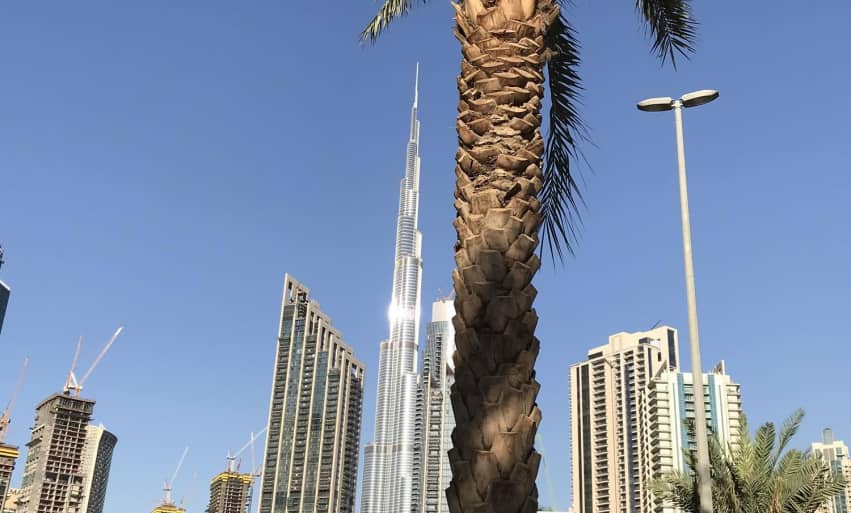
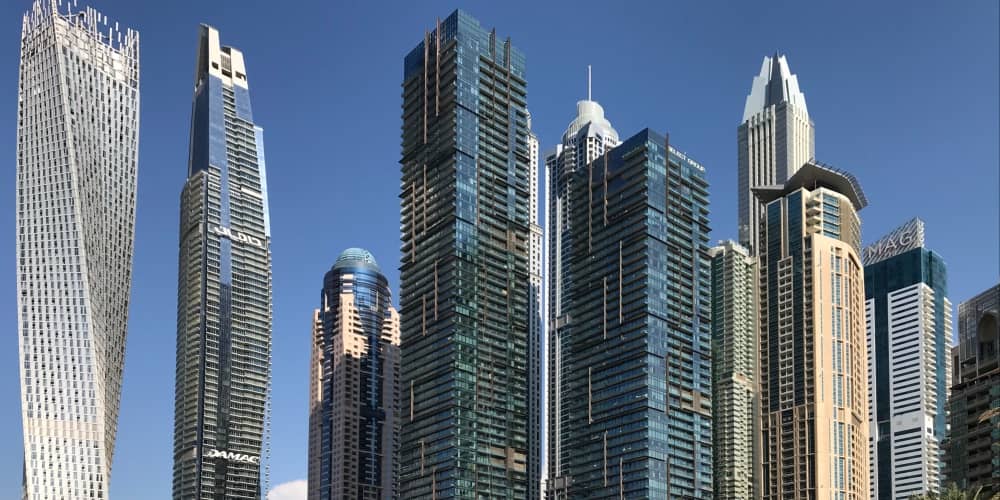
Dubai is now the world’s fastest-growing city; one that was built up over several decades, almost from scratch. Here you will find the world’s tallest building, the Burj Khalifa, 828 metres high; its airport is often called the most dynamic and artificial islands and breath-taking architectural structures attract millions of tourists to the city every year. The continuously growing Dubai will also be the venue for the 2020 Expo. This year, the professional path of the 20-year-old professional association, ALUTA, led to this metropolis presenting innovative architectural trends.

Dubai is of one of the most important sites for urbanisation, tall housing construction, aluminium facade technology and the continuous renewal of building culture. Organised by the ALUTA Association, 40 Hungarian professionals visited and analysed the most important buildings of the city over four and a half days. The unthinkable progress amazed everyone. After all, where in the sixties there was almost just desert, now stands a bustling metropolis. It is interesting that no building materials were available locally in the area. However, in the 20th century, with British assistance, they could convince the tribes living in the area to join forces; then, after the British withdrawal and long negotiations, the United Arab Emirates was founded – that is the alliance of countries – and in this way progress could start along a common structure. Revenues from oil in Dubai, which are only one-tenth of Abu Dhabi’s oil revenues(which is  also in the same community), are reinvested into the city’s development with the operative help of the sheik and, under central government control, a 10-30 year long urban development plan has been created, thanks to which developments unique in the world have started. They have not foregone the unrepeatable opportunity to use oil revenues as a springboard to develop an industry and economy, alongside the unique tourism generating it, upon which many generations will be able to build, ensuring security and background for the citizens of the future. It is a good example of the central will and forward thinking that, when they won the right to host the Expo back in 2013, they very quickly transformed the urban development plans. As a result, a year before the World Expo, almost every component of the infrastructure is ready, including the subway, significantly extended to the Expo site, which everyone initially considered superfluous, and is now used by half a million people; or the highways that cross the desert, along which villa parks and apartment buildings have been built. The progress is so tangible that we had the feeling that the city had expanded even during the four days we spent there.

Dubai is trying to take advantage of the benefits that they have invented and created for themselves. For example, their airport, envisaged as a transportation hub, hosts 85 million people each year, of which a large percentage are in transit, since Asian, American and Australian destinations are conveniently accessible from here. Even so, they are able to provide hotels, offices, service units and luxury services of an appropriate infrastructural quantity and quality for it. Their office and residential developments strongly point in one direction: they envisage a one to two year return on investment in real estate investments. The buildings are built to a high standard, mostly by Indian and Pakistani migrant workers who earn in Dubai roughly ten times their local salary. Currently, only nine percent of the city’s population are indigenous; the three million people living there are members of about 200 various nationalities. Dubai forms a kind of island amongst the neighbouring countries, as many hostile ethnic groups live there in peace with each other, all without leaving behind their own customs. And the service could agree on a common denominator for the construction culture that everyone is able to accept. The engineering solutions are unique inasmuch as the most everyday devices, such as toilets and showers, are built with solutions that are totally appropriate for an Asian, an African, an American or a European person. They all contribute to the fact that anyone can feel at home in Dubai.

Because of the one to two year return, price levels must be maintained, despite the fact that all building materials are imported into the country. Although they have an aluminium industry, it nevertheless also uses imported raw materials. Due to the local conditions, the prime contractor sector operates in a completely different manner than in Europe, and its philosophies on using building materials are also different. There are no classic private general contractor companies; skyscrapers and large buildings are built based on the investment of state-owned companies; raw material procurement and installation is also done in a controlled manner. They don’t admit any individual foreign companies without at least 51 percent local ownership; this is done many times with the involvement of Dubai sponsors, as they are called. Multinational companies may therefore only be present in free trade areas, subject to special and strict regulation.

In the area of building material use, no-one can spend more than they need, not even by one Dirham. Facades are built, for example, not by thinking of profile-scales specified by the manufacturer, but they order the manufacturing of tailor-made custom elements for the sake of building a project, taking into account the specific wind load and meteorological stress. As a result, they save a lot on raw material imports; on other hand, they have slowly started to manufacture products that require a lot of manpower locally because it is more profitable. The presence of Pakistani and Indian guest workers provides human resources and their wages are at a similar level as those of the European workforce. It is interesting in the summer they build during the night because of 48 to 50 degrees daytime heat, while in the winter season workers work in construction sites often 24/7, in two 12-hour shifts.

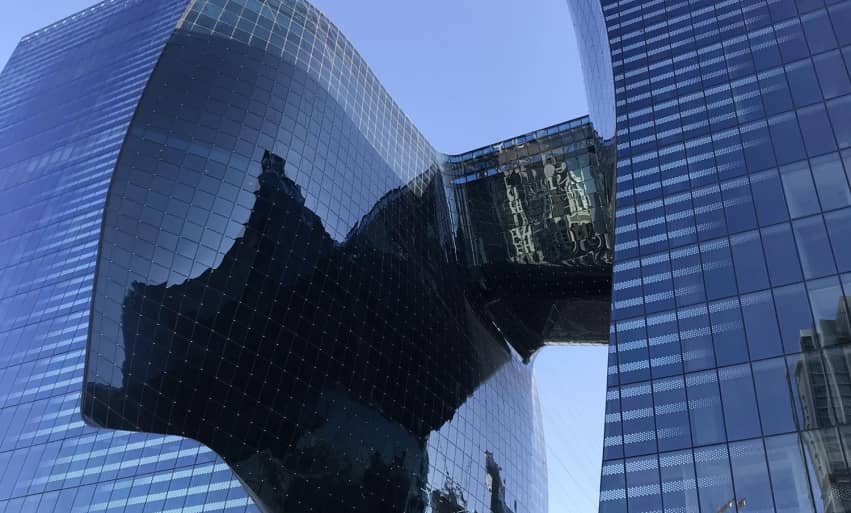
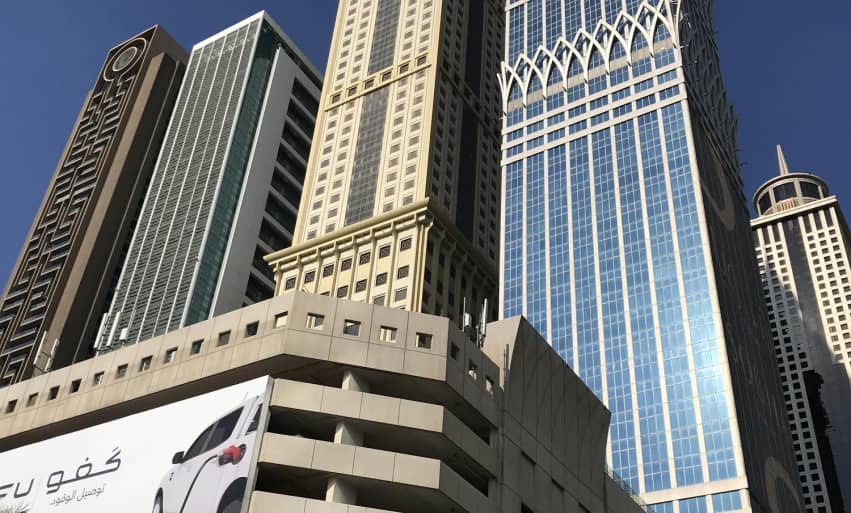
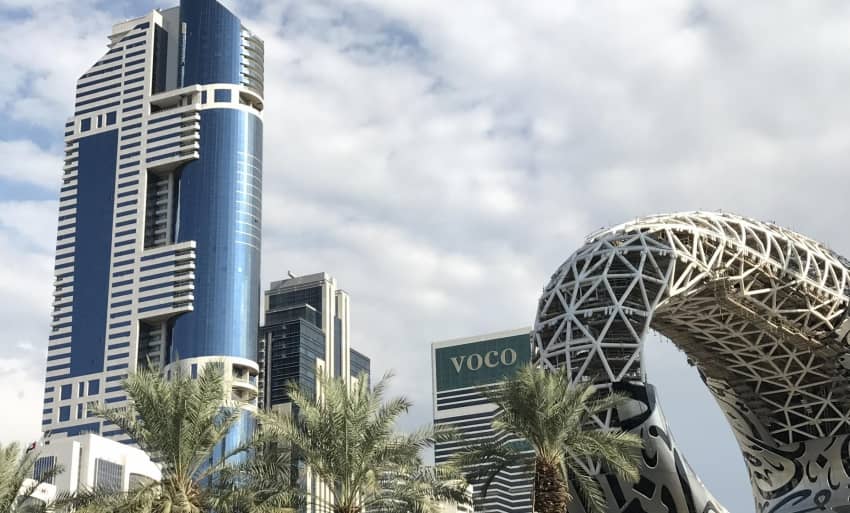
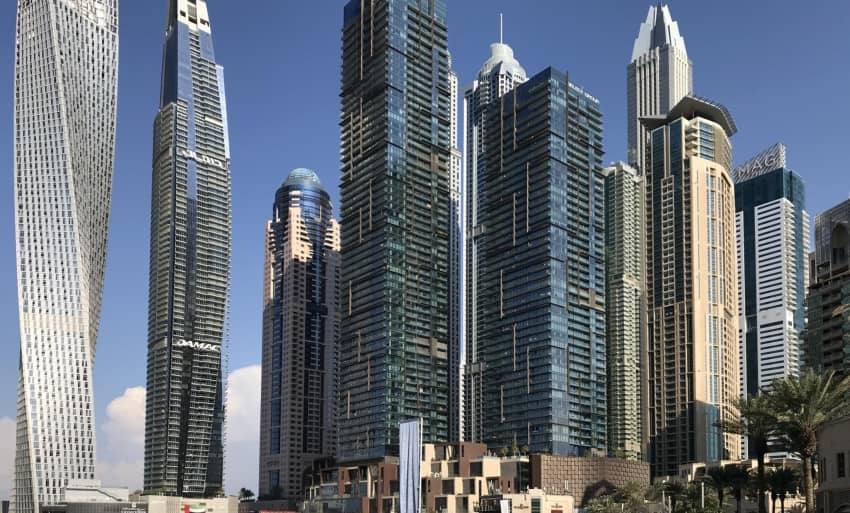
Being special always appears as an important criterion in the design of tall buildings. No two identical skyscrapers, office buildings or facades may be seen. The supporting structure of tall buildings is built of reinforced concrete and steel, and the lower ones also of concrete or masonry infilling elements. In skyscrapers, a glass facade is always displayed with special, unique solutions, which allow the house to be remembered. The largest architect firms are also present, including Foster + Partners; and amongst the buildings we can mention The Opus, built on the basis of the designs of Zaha Hadid, on which a world unique facade solution appears: the twin towers are combined through an irregular cube, thanks to which a non-figurative hole appears between the interconnected building masses. The world’s current tallest building, the Burj Khalifa serves as a lesson for the professionals in the way in which premium and simpler solutions have been combined (for example at the nodes, so that they seem to be the highest quality); and then a new 1,300-metre skyscraper is planned, which will set up a new record.

The water supply is unique in that skyscrapers tare built with engineering floors, usually every 20th or 30th floor, that operate as water towers, and drinking water is pumped further up in this way. In addition, there are no water towers in residential areas because they did not want to destroy the view, and hence water pressure is low everywhere. To solve this, custom-fitted water pumps are installed in single family homes – often on the roof, completely hidden. Two highlights of the water saving are that no twist taps may be seen in high-traffic washrooms, infrared sensors are installed almost everywhere, while black water is cleaned by biological treatment and the resulting grey water is used in public areas for irrigation, after adding nutrients. Irrigation, which could create a living green ecosystem in the middle of the desert, has a separate network.  Buildings are typically over-cooled, which often seems to be a waste of energy for Europeans, for example, when cars are parked in the underground garage with the engine running for the duration of a shopping trip of up to one and a half hours, to have the A/C constantly operated. The amazing amount of energy needed in the city is currently obtained primarily from natural gas-operated power plants and a nuclear power plant is now under construction, which can supply energy in the future to the constantly growing needs.

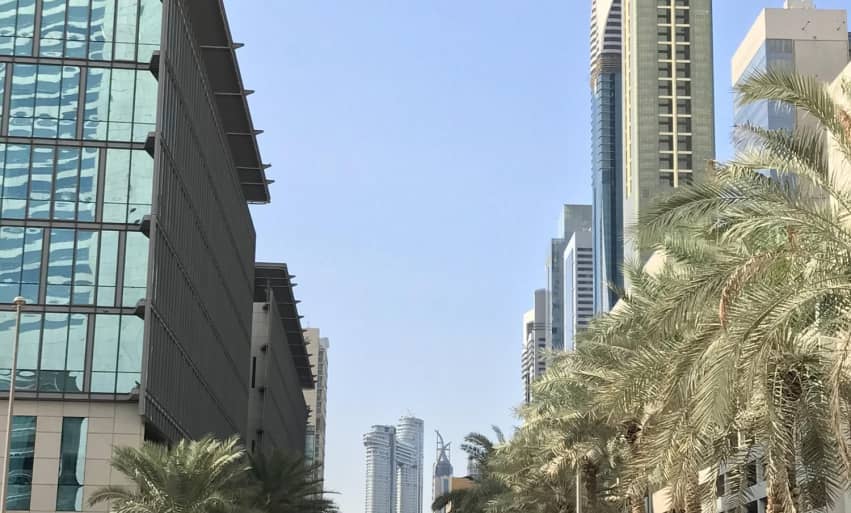
Dubai may send the message to professionals working in architecture that there is a demand for design, construction and maintenance of buildings of such quality, to which at home we always give a negative answer. Construction of buildings with completely individual designs can also be realised in large quantities. Here, every building is different from the others but this requires a very strong professional background, central support and control and will. And this ongoing construction brings along further and further economic benefits, which, as a mutually reinforcing and interlinked process, pumps money into the country around the clock. They build with much greater freedom, which from home seems to be amazing and which, however, is used in an extremely clever way. In a city where even the cell phone towers are disguised as palm trees.

Author
Lovász Károly & Magócsi Anikó
Dubai, the city of superlatives
01
00
dubai-a-legek-városa
Dubai, the city of superlatives - 7
dubai-a-legek-városa
Dubai, the city of superlatives - 9
Dubai, the city of superlatives - 10
MoreNews
01
020
2018 / 10 / 10
When a dreamt-of work of art becomes a reality
Properties being created in an ongoing KAV project may nearly be interpreted as works of art. No company with relevant references could be found, either in Hungary or abroad, for the implementation of buildings that were considered unique at the European level too. We talked about this special job with Mihály Fodor, the Managing Director of the implementing company, and András Havasy, the project’s Technical Director.
Show more
2021 / 04 / 22
Schüco-alumínium-erkélyajtó-ablak-ü
ALUMINIUM DOORS AND WINDOWS AND THE KAV HOME
For a long time, aluminium doors and windows were just the privilege of communal buildings, offices and the exclusive family home market. KAV Home was created to provide a value-for-money solution for customers who have never dared to dream of aluminium doors and windows. Trends and solutions are also available with these products, which are very well adapted to the customer’s needs.
Show more
2020 / 10 / 01
Schuco-aluminium-emelo-tolo-erkelyajto-ajto-ablak-nappali-uveg-epiteszet-minimal-house-belter-interior
Frameless sliding door structures with an architect’s eye
Each project poses a different challenge to architects and to door and window professionals as well. One of our reference concepts is based on the unlimited view created by the wing-opening roof and the space stretched by the floor. Filigree division solutions, as well as frameless sliding mechanisms, were the main solution to achieve maximum transparency. We talked to the architect Orsolya Glavanovics about the issues raised by the aluminium door and window solutions implemented during the design and construction, who the Myd-II Interior Design Stúdióval planned it jointly, house operating on this for the special fenestration solutions.
Show more
2022 / 02 / 08
Alukönigstahl-alukoenigstahl-ungarn-Eiles-Károly-
THE MARKET SHARE OF ALUMINIUM WINDOWS AND DOORS IS CONTINUOUSLY INCREASING IN RESIDENTIAL PROJECTS
The market share of aluminium and steel doors and windows in Hungary is constantly increasing with regard to single-family home projects as well. However, even in this stable market, the year 2021 introduced a number of unexpected situations: cancelled professional events, shortages of raw materials and supply chain disruptions. We spoke to Károly Eiles, the company's investment and general contracting consultant, about the impressions with which Alukönigstahl Kft. (the distributor of Schüco and Jansen systems in Hungary) closed this challenging year.
Show more
2017 / 08 / 02
The Vizafogó parish lodge has been renewed with KAV support
The full building structure, energy renovation and functional extension of the St. Martin of Tours parish lodge has been completed. The concept of this building on Váci út in Budapest, serving religious purposes, was developed by the head of our company, Károly Lovász. And although the implementation was performed by others through the public procurement procedure, KAV supported and checked the entire process as professional advisor during the works. We talked about this five year process with Dr Gábor Tamás Juhász, the parish priest
Show more
2023 / 06 / 12
Reynaers-aluminium-nyilaszaro-Kenyeres-Laszlo-epitesz-latvanyterv
Windows in the Design Process from an Architect’s Perspective
The question of when to engage window experts in the design process often arises. In this context, architect and head of the Archista architectural firm, László Kenyeres, shares his experiences. He believes that in today's architectural design process, windows and doors are a critical aspect because they represent one of the most complex parts of a building. Therefore, even those not well-versed in the world of windows may require external assistance to confidently complete an execution plan.
Show more
2022 / 12 / 20
Reynaers-Schuco-hifinity-minimal-uvegfal-keret-nelkuli-tolo-lamellas-arnyekolo
A flawless building with KAV windows and doors
The panorama is the soul, and the glass surfaces are one of the main organizing elements of the exceptional villa that the Etna and KAV teams worked on together. We discussed the building's features and the process of realization with Nikos Zizidis, the CEO of Etna Kft., the construction company responsible for the project.
Show more
2020 / 05 / 27
KAV-OPTIVISION-BROSSÚRA
Professional and readable content on the new KAV website
A notable feature of the market for custom doors and windows is that professionals, construction operators and property owners are equally curious about our products and innovative solutions. This was our guiding principle during the development of our new website; the final design follows the layout of quality magazines, while our text-based content aims to provide readers with useful information.
Show more
2022 / 10 / 07
Schuco-curtain-wall-minimal-luxury-house-glass-front-door-exterior-facade-luxury
The relationship between aluminium doors and windows and the façade
In parallel with the advent of the latest aluminium door and window solutions, including filigree case systems and large glass surfaces, façades have also been transformed in the family home market. In addition to functionality, design also plays a key role in more and more buildings. However, architects rarely involve professionals in the process of designing doors, windows and façades. According to Krisztián Vatai, executive director of Facade Design & Building, who is engaged in the design, construction and production of façades, a change of attitude and education is needed to change this.
Show more
2015 / 02 / 15
A facade is not a private matterv
I think this company has a sincere desire to do good. There's a precise company executive who really wants to do the best he can, and this desire affects the whole company. And that's what the customer sees.
Show more
2021 / 01 / 06
With unique windows to Norway
Aluminium windows and doors also play a prominent role in Norwegian architecture, not only in public construction, but also in residential buildings and condominium investments. The long-term goal of KAV is, after Iceland, to gain experience in Norway, so it applied for admission to the Hungarian-Norwegian Chamber of Commerce (MNKK). We talked about the possibilities with the founder of the chamber, Klára Jankovics, and Beatrix Kosztyi, foreign economic attaché, the secretary-general of the chamber
Show more
2019 / 03 / 13
Reynaers-alumínium-nyílászáró-tolóajtó-emelő-toló-ajtó-minimál-homlokzat-lézervágott-lemez-burkolat-terasz-kert-kapcsolat-üveg-építészet-exterior-night
The evolution of closing systems in Hungary
If one spends many years in a specialised technical segment, sometimes answering questions from a professional interviewer will inadvertently recall the period from the beginning to the present. Studying the evolution of window and door products used in residential buildings is also instructive, because fashion always changes along with demand and financial opportunities. Everyone sees the past differently - we, Hungarians are special in this - but sales figures outweigh perceptions.
Show more
2021 / 07 / 21
kisber-uzem-kav-hungaria
Production of custom doors and windows at the KAV plant
Most domestic companies selling aluminium doors and windows do not have their own production capacity. However, in KAV's imposing manufacturing plant, they are able to resolve even seemingly impossible profile connections. This is where further thought-out versions of Schüco or Reynaers profile elements and completely unique door and window solutions are manufactured, designed and developed by KAV engineers. We talked to Albert Herbut, the head of KAV's Kisbér plant, about the production processes and the operation of the plant.
Show more
2019 / 02 / 07
Rebirth of a Bauhaus villa
This year, the Bauhaus is 100 years old, and it is a great pleasure for us to take part in the renovation of a property displaying the marks of this school. When the Bauhaus appears as a description of a building, it is a guarantee of clean shapes, exciting spaces and quality materials. Even so, it is important to point out that although several Hungarian architects were in contact with the famous German school, there are hardly any Bauhaus buildings, in the strict sense, in Budapest. Péter Lenzsér, the architect, talked about how this building bears the hallmarks of style and how it is worth embarking on such a renovation.
Show more
2017 / 08 / 17
KAV, as a small enterprise, sets a brilliant example
Already more and more managers in Hungary recognise that an excellent company can only be built based on its employees. Investors in People Hungary aims to support companies with outstandingly good practices in organisational development and to set them up as example for the other actors in the economy.
Show more
2021 / 05 / 21
Lovász-Károly-KAV-Ügyvezető
Aluminium doors and windows with custom solutions
The founding of KAV Hungária was also triggered by an innovative idea: why not introduce aluminium doors and windows to the family home market? Since then, our own developments, individual solutions, needs assessment and construction work organisation have become the defining elements of the company. Károly Lovász, the managing director of KAV, Gábor Csóti, the founder of the Gamechangers community and Kálmán Szabó, the host of the podcast by the Association for Excellence Public Benefit Association, spoke about innovation, the underlying managerial thinking and organisational structure.
Show more
2023 / 06 / 29
Nagy üvegfelületű alumínium nyílászárók beépítése
The Art of Installing Large Glass Panels: A Technical Journey with KAV
In recent times, we have shared several recordings depicting the installation process of large glass surfaces as part of KAV's daily operations. To shed light on the distinctions in window installation and preparation when incorporating larger glass sizes into a property compared to standard glass dimensions, we interviewed Mr. Péter Nagy, Senior Engineer, and Mr. Károly Lovász, CEO of KAV.     
Show more
2020 / 06 / 11
Hégli-Henriette-KAV-Hungária-Iroda-munka-2
We pay attention to what the customer wants to create
The KAV team is constantly expanding; we are currently looking for employees for several positions. Henriette Hégli graduated as an economist and came to our company in July last year after a career as an executive and real estate salesperson. As project coordinator, she is responsible for preparing individual quotes. In order to be able to perform her task as optimally as possible, she took part in a freshman programme in the first few weeks of her start-up, in which she got to know in detail the individual work processes, the market for custom doors and windows and the KAV way of thinking.
Show more
2022 / 08 / 11
Schüco-alumínium-ferde-szemöldök-alakos-külső-napvédelem-nyílászáró-Schlotterer-raffstore-lamellás-árnyékoló-motoros-rejtett-geometria-exterior_
The market for shading in Hungary
Although, in the past, residential properties tended to be built in Hungary without shading, today it is a priority in the design process. Due to climate change, it is just as important for property to provide an optimal thermal performance in the summer period as it is during winter. For this reason, KAV began designing customised shading. Of course, when introducing an innovation, we need to take into account the nature of the Hungarian market. KAV’s Managing Director, Károly Lovász, talks about the most exciting developments.
Show more